
Concrete absorbs water and releases it slowly, and the walls around a lower-level unit are often concrete or block with a lining over them. Water that gets behind that lining has nothing to carry it out.
Service · Santa Ana, CA
Basement Apartment Water Damage in Santa Ana, CA
Water is standing on the floor of your basement apartment, creeping up the walls or seeping through at the foundation edge. Water damage in a lower-level unit in Santa Ana, where one exists, gathers at the lowest point of the building, and structural drying has to follow extraction through the slab, the walls and the layers above them. Call when you see water standing on the slab, before the pad draws it up.
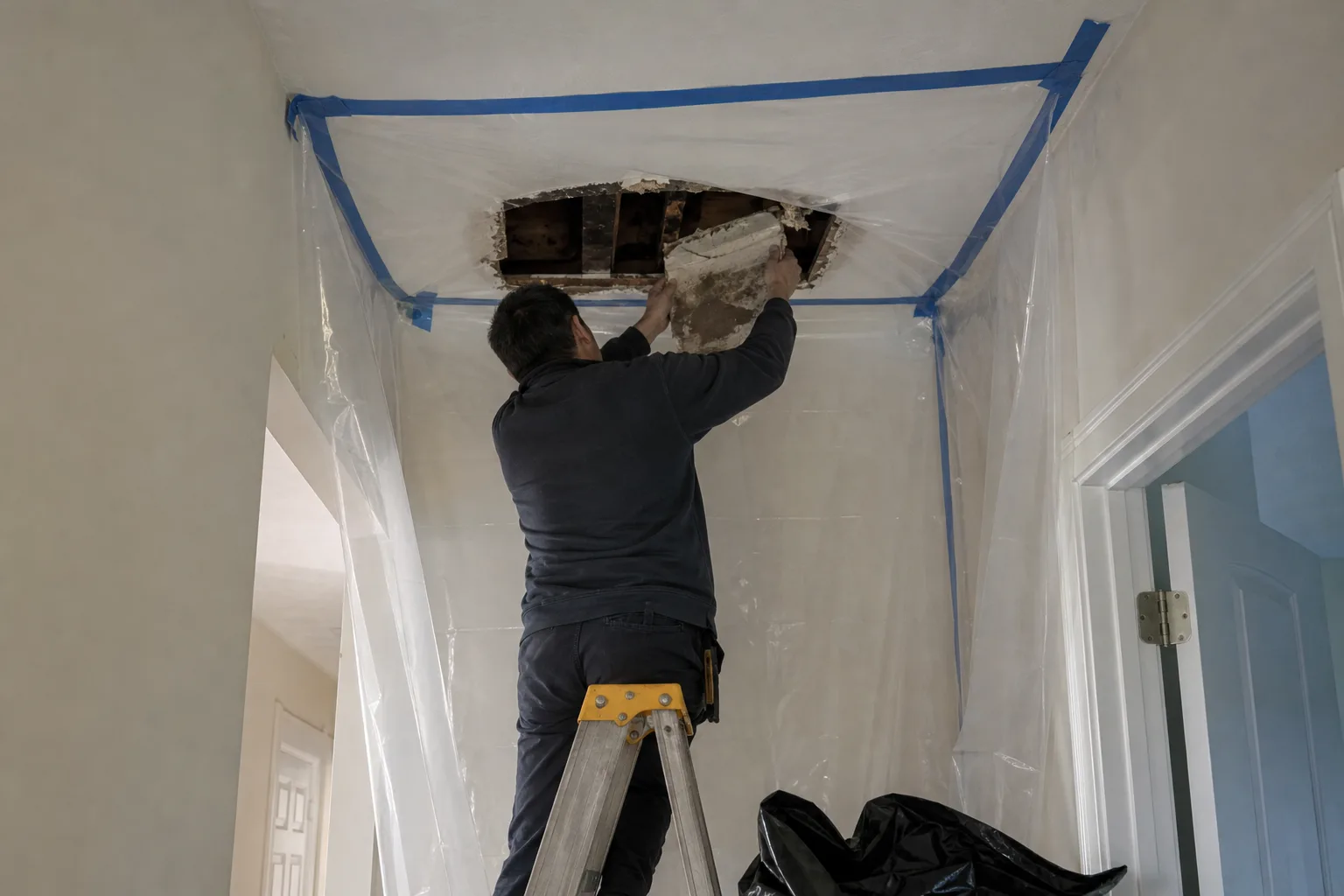
What you are seeing
Water at the lowest level of the building
An Orange County lower-level unit sits where water settles. A line that fails above you, a drain that backs up or water that pours in at the stair or the window well ends up on your slab, and there is nowhere lower for it to go.
- Water across the floor
It gathers over the whole foundation and reaches the carpet from underneath.
- A damp foot of the wall
Water climbs the lining and the furring behind it.
- Darkening low on a door frame
Wood draws water up from the concrete.
- A soaked stair landing
Water ran in from the entry and pooled at the bottom.
Loss risk
Why a lower level holds water so stubbornly
Low ceilings, small windows and a single stair limit the movement of air, so moisture lingers in carpet, pad and lining while the slab feeds it. You smell it long before you see it.
Because every path leads down, a failure anywhere above can arrive on your slab, so you meet the water before you learn its origin.
A lower level is where all the water ends up, and extraction works from the slab outward once the call is made.
(657) 332-2040Property type
What sits low takes the damage first
- Carpet and pad
Water settles into the pad against the slab.
- Wall lining
Panels and furring at the base press water against the masonry.
- Door frames and baseboards
Wood at floor level draws water upward.
Beds, shelving and sofas standing on your carpet press water into the pad under their legs, so those footprints get readings of their own.
Restoration scope
Extraction from the slab and drying behind the walls
Extraction takes standing water first and then the water held in carpet and pad, working across the slab toward the stair.
Readings along the foot of each wall show how high the water has climbed, and the lining comes off at the soaked perimeter so structural drying can get to the furring and the masonry face.
Your ceiling gets its own reading, because water from a line overhead may have fallen through it. Water that rises from a floor drain is sewage water, and the work treats it as contaminated from the start.
Service sequence
Slab first, wall linings next
Pooled water out
Extraction clears the slab and the carpet at the stair end first.
Foot of the wall measured
Readings rise up each wall until the values fall.
Linings off at the perimeter
Panels and furring that retain water come off the masonry.
Upper-level comparison
Drying stops once the concrete, the lining and the carpet read the way a room above grade does.
Local detail
Below grade, water has one direction
Wherever a lower-level unit exists in Santa Ana, water from a failed line, a drain or an entry point heads downward and settles there. Call about the whole slab and the walls around it, not only the damp patch.
Triage order
Water on a slab keeps soaking what rests on it
Whoever can get down the stair and reach the soaked slab can make the call. Water that sits on a slab keeps soaking everything resting on it, and the longer it sits, the more of your carpet, lining and door frames end up hauled away.
Basement apartment water damage keeps drawing water into the carpet pad and the wall linings from the slab up, so call about it at the first wet footprint to hold the loss at floor level.
Scope: Emergency extraction and structural drying clearance only. Structural rebuild and finishing carpentry are contracted separately.
Service area
Santa Ana ZIP codes
- 92701
- 92703
- 92704
- 92705
- 92706
- 92707
Every responding technician is independent. Before work begins, confirm the technician's license, insurance and pricing with them directly.
Common questions
About a lower-level unit
Does water on a slab always soak into the concrete?
Concrete absorbs some and holds it, and carpet and lining laid over it trap the rest, so the slab and the layers above it get separate readings.
Why do the wall bases need measuring when the floor is the soaked part?
Water climbs lining and furring by wicking, so a wall that looks dry can hold water along its lower rim.
Is water from a floor drain handled differently?
It is. Water that rises through a drain is sewage water, and it is cleaned up as contaminated water and not simply dried.
Does the stair landing matter?
It does. Water that comes in from the entry pools at the bottom of the stair, so the landing and the first steps get readings before the slab does.
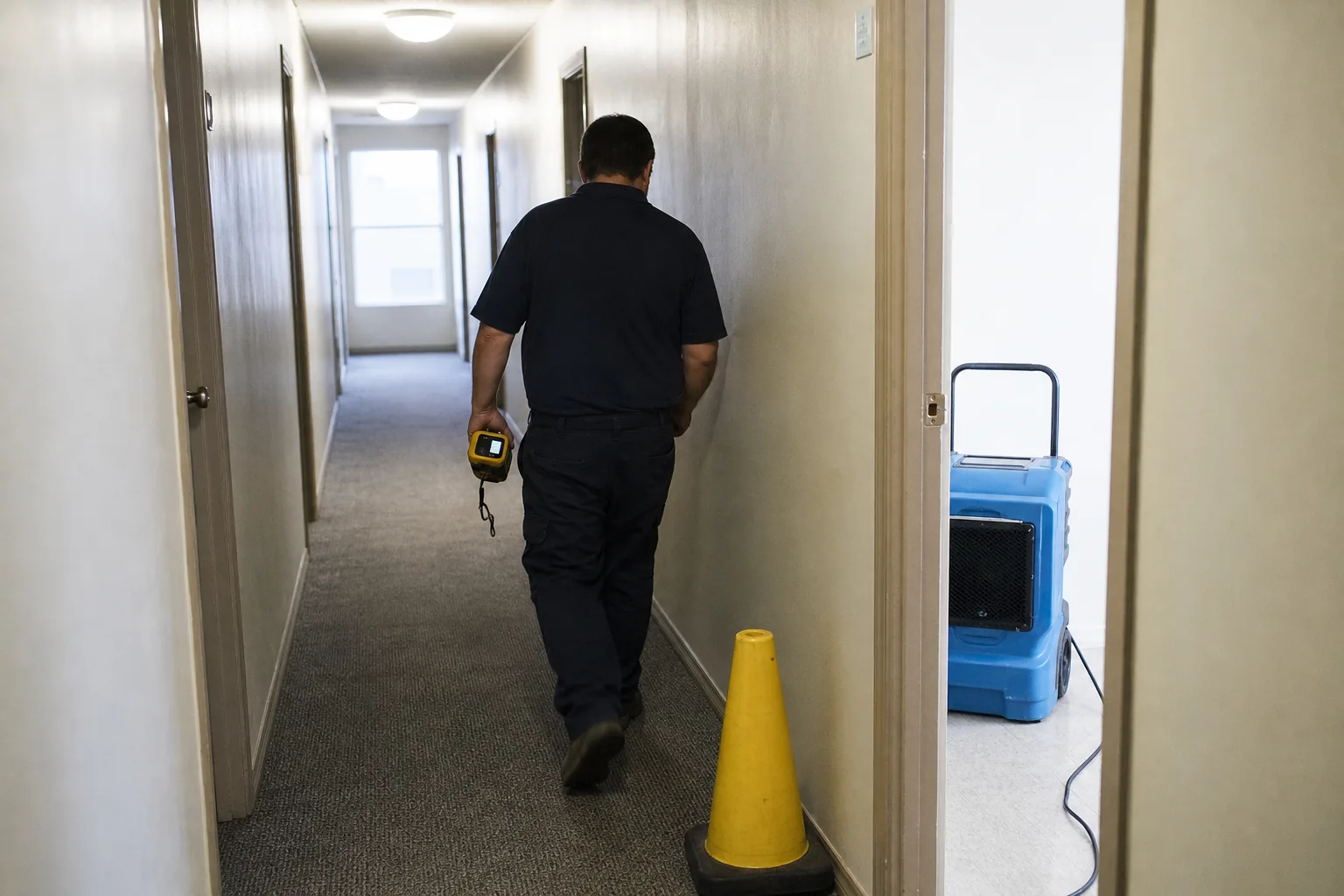
Water damage keeps spreading until it is dried.
Call from Santa Ana before the water reaches the next room, the subfloor or the framing behind your walls.