
Once extraction finishes, most of what remains sits where you cannot see it. It sits inside wall cavities, under flooring and in the framing along the bottom of every wall.
Service · Santa Ana, CA
Structural Drying and Dehumidification in Santa Ana, CA
The standing water is gone, but your baseboards still feel damp, one wall reads wet near the floor and the room smells stale. Structural drying and dehumidification take the moisture that soaked into wall cavities, framing and concrete back out of your Santa Ana home. Moisture that stays inside the cavity decides how much trim and board you replace, so the call belongs at the first damp baseboard.
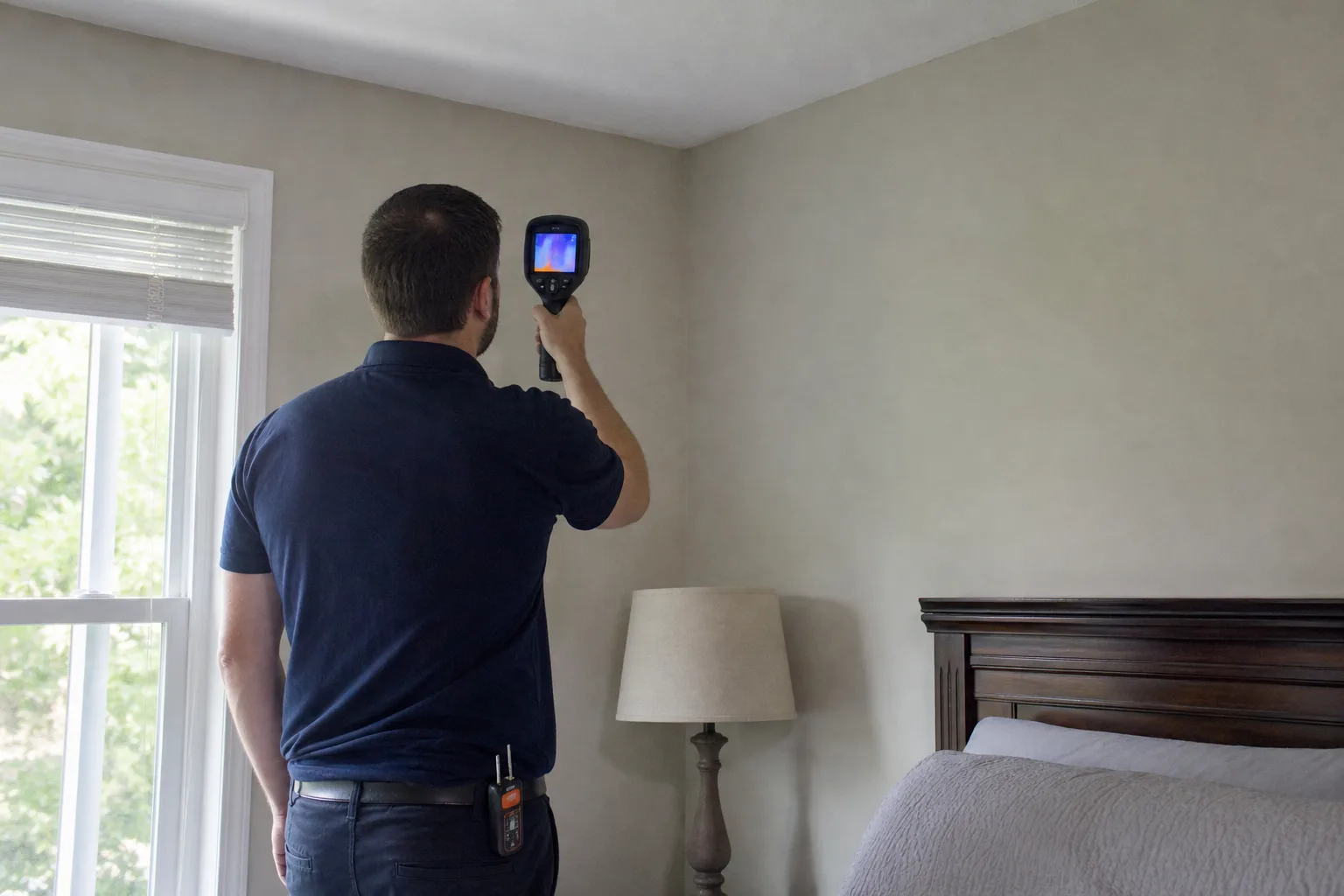
What you are seeing
The room looks dry and the wall still reads wet
You find it through small signs: a chilly baseboard, a stale note in the air of an Orange County closet, a hairline gap at the floor edge. None of them means water is still arriving. They mean what soaked in has not left.
Loss risk
Trapped moisture keeps damaging after the puddle is gone
Wet materials release water gradually, and a closed wall keeps it in. The longer it stays, the more the board softens, stains and decays.
- Gypsum panels
Wet board turns weak at its lower edge and breaks down.
- Lower framing
Lumber that stays wet begins to decay, and a drying job grows into structural work.
- Wall insulation
Wet fill presses against the board and keep it wet from the inside.
- Concrete
A damp slab keeps pushing moisture up into whatever rests on it.
Moisture inside a wall stays after the floor looks dry, and the framing and the board are what hold it.
(657) 332-2040Restoration scope
How drying reaches walls, framing and slab
Structural drying treats your building as one wet system with a target, not as a room with a stain.
- Cavity drying
Dry air moves through wall bays and under flooring and draws moisture out of the materials.
- High-capacity dehumidification
Each room's air stays drier than the materials in it, so they keep releasing water.
- Hidden-wet detection
Moisture mapping finds wet framing and gypsum behind a surface that looks fine.
- Opening where needed
Material that cannot reach a dry standard opens up so the structure behind it can.
Property type
Which materials dry in place and which open up
Undamaged painted gypsum, studs, plates, sealed floors and concrete usually reach a dry standard where they sit. Board that has gone soft, particleboard cabinet bases and soaked underlay usually do not.
Readings settle it material by material, so a wall you expected to lose may stay and a floor you expected to keep may go.
Outer walls, dividing walls, storage walls and the walls behind cabinets each hold water differently, which is why the setup treats them one at a time.
Service sequence
How a drying job moves from first readings to a dry standard
Baseline readings
Each wall, floor and cabinet gets a starting value, set against a dry room in your home.
Drying setup
Airflow and dehumidification go in room by room, matched to where the readings run highest.
Repeat visits
Each visit measures the same points again and shifts the setup toward whatever still reads wet.
Dry standard met
Work ends only when every wet material matches the dry reference.
Local detail
A wall cavity has no airflow of its own
Water that reached the inside of a wall stays there until drying work opens a path for it. Call about the cavity and the framing behind your Santa Ana walls, not only the surface in front of you.
Triage order
A dry-looking room with a wet wall behind it
A room that looks dry can hold water in a closed wall for as long as the wall stays closed. Each stretch of waiting adds stained board, swollen trim and softer framing.
At the first sign of a damp wall base, call, so the framing and flooring have the chance to reach a dry standard where they stand.
Scope: Emergency extraction and structural drying clearance only. Structural rebuild and finishing carpentry are contracted separately.
Service area
Santa Ana ZIP codes
- 92701
- 92703
- 92704
- 92705
- 92706
- 92707
Every responding technician is independent. Before work begins, confirm the technician's license, insurance and pricing with them directly.
Common questions
Drying that continues after the water is out
Why does drying continue after the water is out?
Extraction clears the surface water, but gypsum, framing and concrete keep water inside them. Drying continues until readings show those materials have released it.
How do you know when the drying is finished?
Readings decide. Each wet material has to match a reference taken in an unaffected room before the work closes.
Can walls stay closed during drying?
Sometimes the airflow reaches the cavity through small openings, and sometimes board at the base has to come out. What the cavity reads decides.
Why does a drying job involve repeat visits?
Materials release water at different rates, so each visit measures the same points again and moves the setup toward whatever still reads wet.
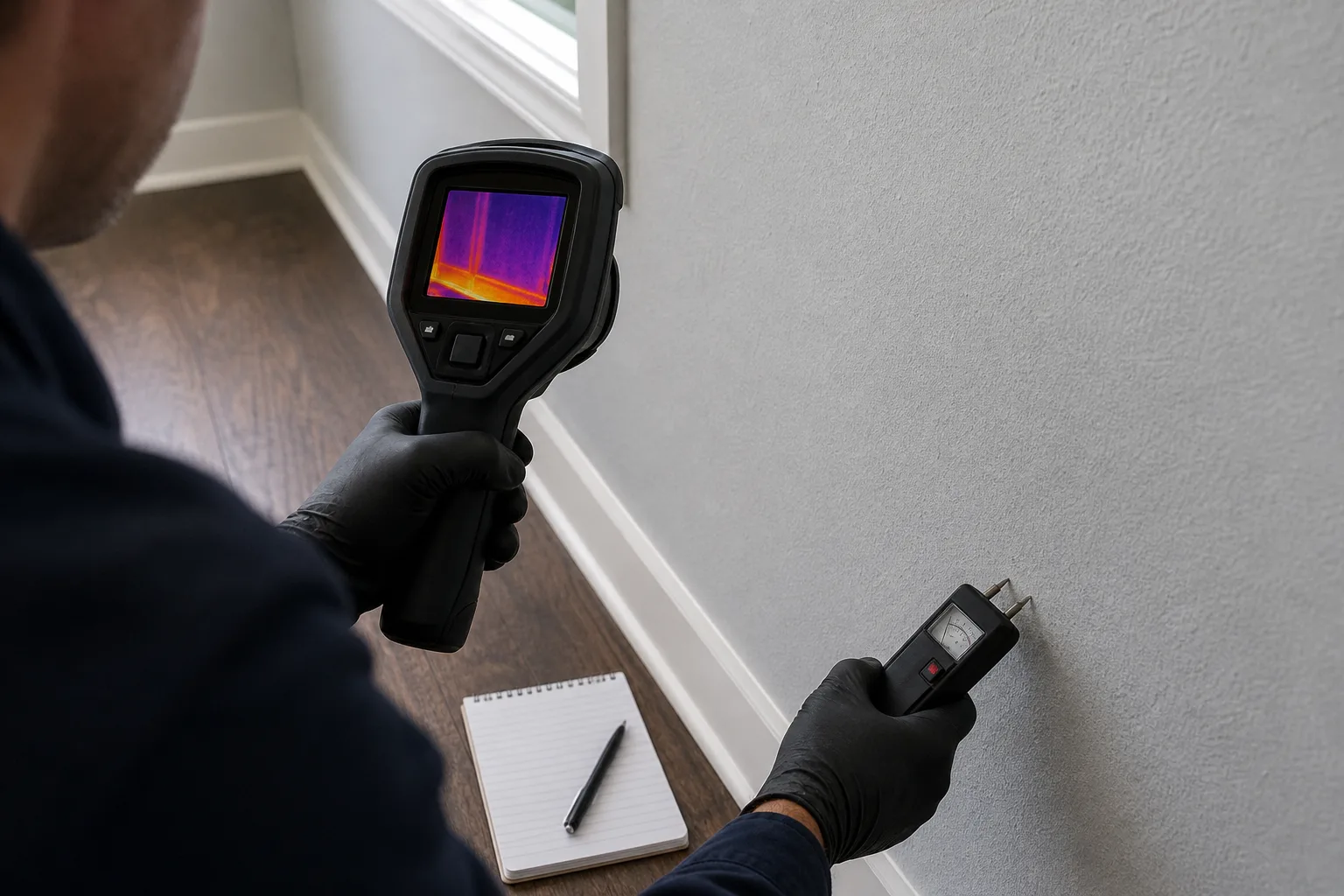
Water damage keeps spreading until it is dried.
Call from Santa Ana before the water reaches the next room, the subfloor or the framing behind your walls.