
Water is pooling on your floor, a brown ring is spreading across the ceiling, or the baseboards along one wall have turned soft to the touch. Water damage restoration in Santa Ana starts with where that water goes next: into the drywall, the carpet pad, the trim and the slab beneath your flooring.
Santa Ana · Orange County
Emergency Water Extraction in Santa Ana, CA
Water damage restoration starts at the source. Pick the line that matches what you are looking at, then call before it spreads.
- Name the source: a pipe, the weather or somewhere you cannot see.
- Hidden moisture keeps damaging framing after the surface dries.
- Everything starts with one phone call.
 Call to stop the spread(657) 332-2040
Where is the water coming from?
- 1 A pipe, fixture or appliance Supply lines, water heaters, washing machines and drains inside the building.
- 2 The sky or the ground Roof leaks, storm water at a door or garage, ground water rising around the foundation.
- 3 Somewhere I cannot see Damp smell, stains or warped flooring with no visible source: inside a wall, under a floor or from a unit above.
Why call
Why the first call matters in Santa Ana
Moisture keeps moving after the water stops. Call as soon as you see it spreading, while drying in place is still possible.
- Professional water damage restoration typically follows a set process of extraction, drying and moisture monitoring, set out in the IICRC S500 standard used across the industry.
- Water wicks up drywall and spreads under flooring while it sits, so close the source and call before it reaches the next room.
- Calls come from across Santa Ana and Orange County: call the moment you see water, not after it stops.
1
Restoration needs
Water, storm and related property damage can each call for a different kind of work.
2
Local conditions
Water damage in Orange County depends on local climate, construction and flood patterns, so those are set out below.
3
Call before it spreads
Close the source and keep clear of wet outlets. Then call: drying starts sooner, and more of your home stays in place.
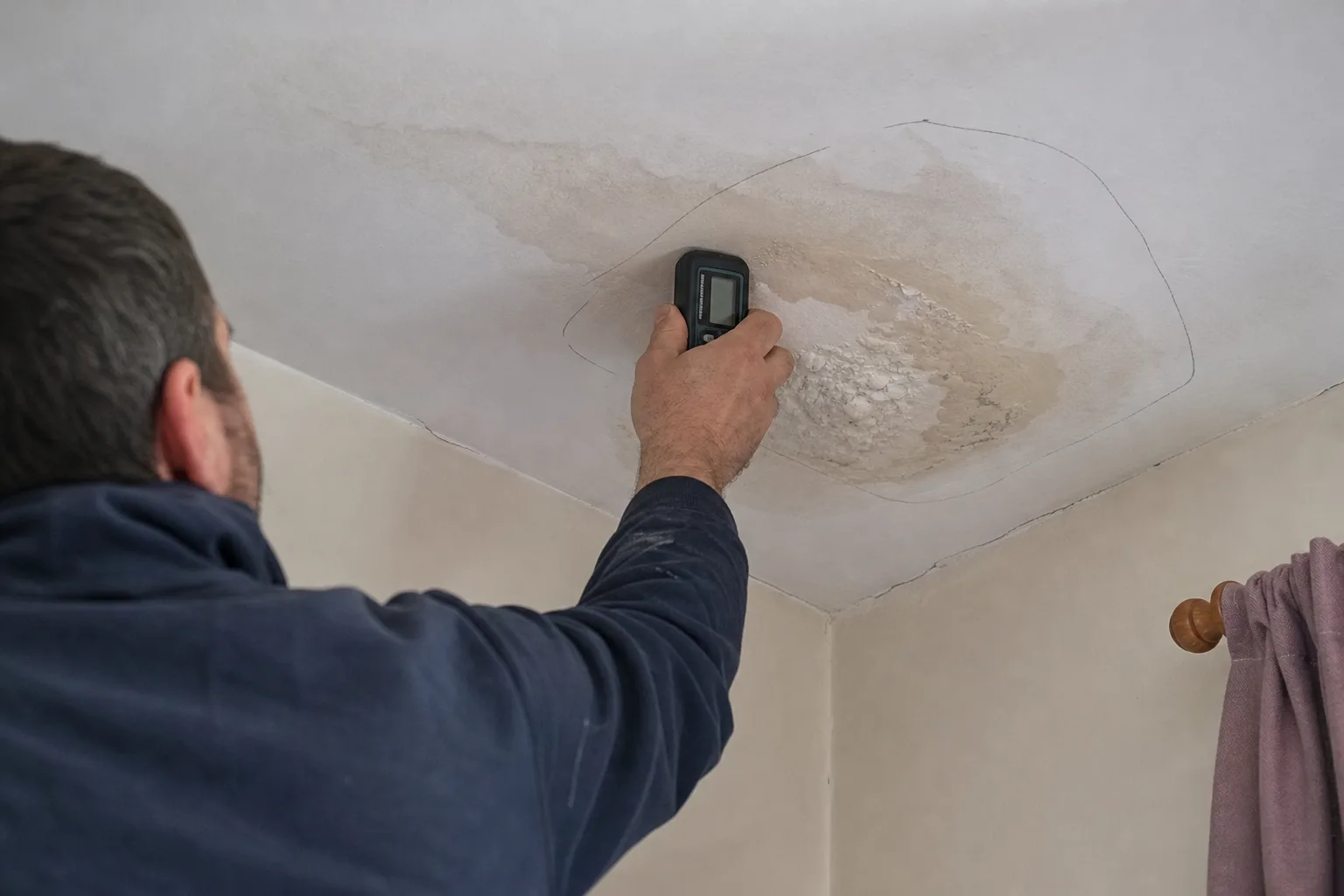
Staining shows only part of where moisture has traveled.
Recognise the problem
What you can see, and what the building is hiding
The visible signs of water damage in a Santa Ana property are the first column. The second is what moisture does inside the structure after the surface looks dry.
Service categories
Most requested
Immediate signs
- Standing or pooling waterOn a floor, in a basement or garage, or against an outside wall.
- Wet carpet, padding or flooringPadding holds water long after the surface of the carpet feels only damp.
- A stained, bulging or dripping ceilingWater is collecting above it. Stay out from under a sagging section.
- Water near outlets, appliances or the panelKeep clear and keep power away from the wet area before anything else.
Hidden structural risks
- Moisture in wall cavities and under flooringA floor can feel dry while the subfloor below it is not; only moisture readings settle it.
- Swollen baseboards, cupped boards, loose tileMaterials move days after the water stopped, which marks where it traveled.
- Musty odor and surface growthDamp materials left in place can support mold, which is why drying is not optional.
- Softened drywall, rusting fasteners, sagging insulationSlow damage that surfaces long after the first leak.
Local conditions
What shapes water damage in Santa Ana
About 80 percent built before 1980
Housing stockAbout 80 percent of Santa Ana's housing units were built before 1980: 24.5 percent in the 1970s, 22.2 percent in the 1960s, 20.1 percent in the 1950s and 13.5 percent before 1950.
Supply lines, drains and shutoff valves in homes of that age are often original or repaired in sections, and a failure behind a wall or under a floor can wet more material than the visible stain suggests.
Call when you see a stain, a musty smell or a warped floor, so the wet area is traced through the wall and floor and not only along the visible mark.
Santiago Creek meets the Santa Ana River in the city
Water and terrainSantiago Creek runs through Santa Ana to its confluence with the Santa Ana River, and OC Infrastructure Programs lists a flood-protection and erosion-control project for the reach between the I-5 Freeway and that confluence.
Water that overtops a channel or backs out of a drain reaches low garages, ground-floor units and crawlspaces near the corridor first, and soaks flooring, drywall and framing before it recedes.
Call as soon as water has entered, so the wet materials are located and dried and not only the standing water removed.
The process
Delay and guesswork against a standards-based protocol
The right-hand column follows a published standard such as IICRC S500. The left shows what tends to happen when water is left or handled without readings.
| Stage | Delay or DIY hazard | Standards-based extraction protocol |
|---|---|---|
| Standing water | Soaks into padding, baseboards and the base of the walls while it waits. | The bulk of the water is removed first, with industrial extraction. |
| Is it dry? | A floor that feels dry can still hold moisture in the subfloor beneath it. | Moisture readings are taken and repeated until materials reach a dry standard. |
| Airflow | Closed rooms and household fans move wet air around without removing it. | Drying capacity is matched to the room, its materials and its readings. |
| Wet materials | Left in place, they swell, stain and can support mold. | Porous materials that cannot be dried are removed and discarded. |
What you are seeing
Standing water, a spreading stain, or baseboards gone soft
While it sits, clean water from a supply line picks up dirt and turns foul, swollen trim splits at its seams, and drywall softens from the bottom edge upward. A room you could dry where it stands becomes a room that loses its walls and its floor covering.
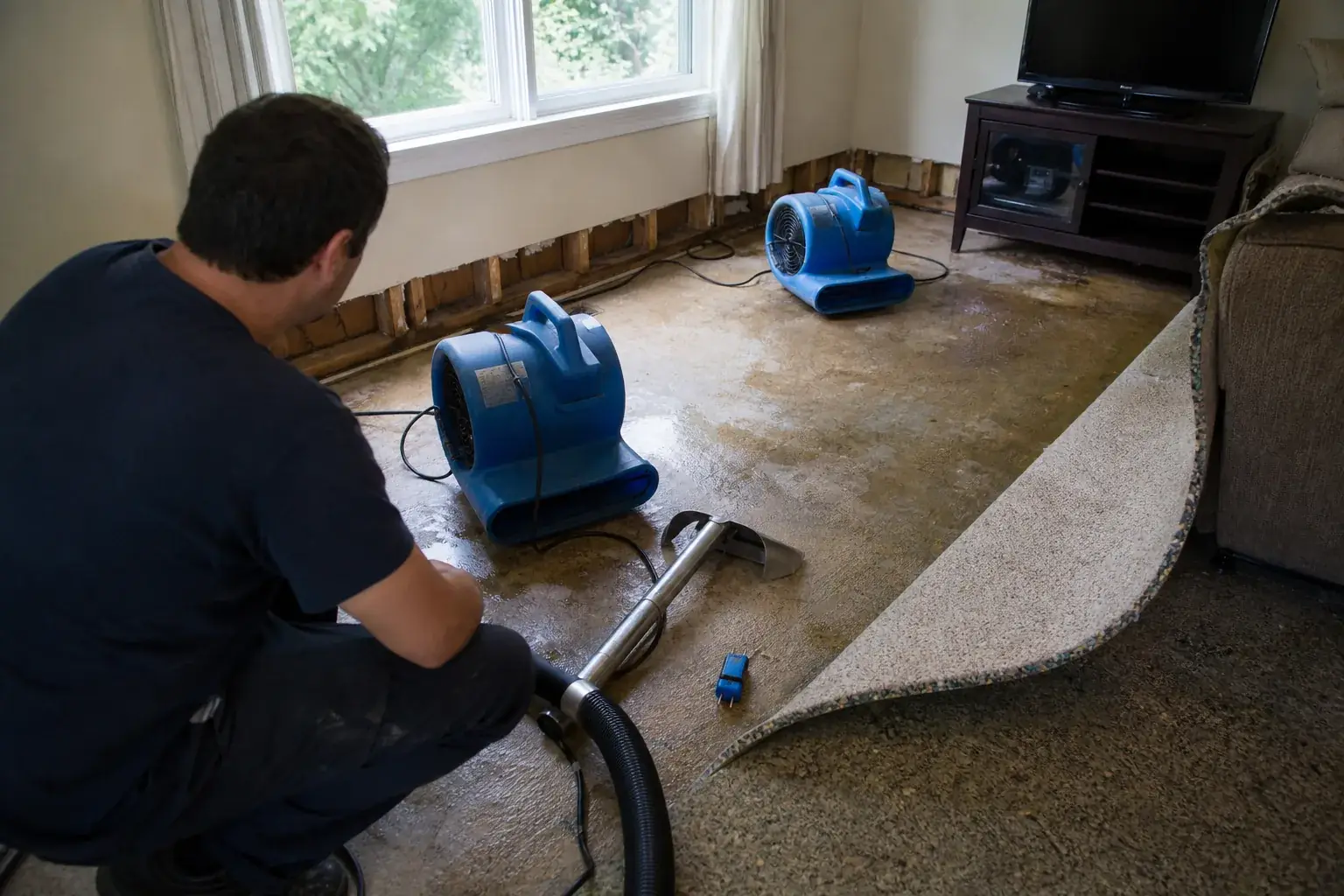
Standing water needs water extraction drying in Santa Ana before it wicks into the framing. A call at the first puddle keeps the drywall and pad in the dry-and-keep column, not the cut-out pile.
Loss risk
What standing water destroys in drywall, pad and framing
The puddle is the part you see. The larger loss is the water that soaks into gypsum, particleboard and carpet pad, then climbs the bottom plates of your walls and keeps rising after the floor looks dry.
- Drywall
Wet gypsum loses its strength and crumbles at the base, so a panel that could have dried becomes a cut-out.
- Carpet pad
The pad holds water against the slab and carries odor through the whole room.
- Framing
Sill plates and studs that stay wet begin to decay, and a drying job turns into structural work.
Restoration scope
What professional restoration covers
Emergency water damage restoration treats the whole wet area, not only the puddle. The scope follows the source of the water and everything it reached in your home.
- Extraction
Industrial extraction pulls standing water out of carpet, pad and the surface of the slab.
- Moisture mapping
Readings across floors, walls and cabinets trace how far the water traveled past the visible stain.
- Structural drying
High-capacity dehumidification draws moisture out of wall cavities, framing and concrete until each material reaches a dry standard.
- Controlled removal
Pad, swollen trim and drywall that cannot dry come out so the structure behind them can.
- Sewage cleanup
Contaminated water leaves the structure through extraction, and antimicrobial washdown treats the surfaces it touched.
Water is spreading into your drywall and flooring: call while the wet area is still limited to materials you can keep.
(657) 332-2040What you are seeing
Pre-1980 pipes, walls and shared buildings hide the wet area
About 80 percent of Santa Ana's housing units went up before 1980, so supply lines, drains and shutoff valves in many homes are original or repaired in sections. A failure behind a wall or under a floor wets more material than the stain on the surface suggests.
Most of the city's apartments predate 1980 too, and water in a building that old travels through shared floors, ceilings and walls into the units below and beside the source. One leak becomes several wet properties, and the neighbor's pipe becomes your wet ceiling.
Call when you see a stain, a musty smell or a warped floor, so the work traces the wet area through every wall and floor on every level. property specific water damage in Santa Ana follows the way each building holds and passes water.
What you are seeing
Creek overflow, storm drains and rain through the roof
Water has come in under a garage door, across a ground-floor threshold, or through a ceiling after heavy rain. Santiago Creek meets the Santa Ana River inside Santa Ana, and parts of Orange County can still flood when local storm drains overflow, even with extensive flood-control protection.
- Storm-drain overflow
Water backing out of a drain floods low garages and patios and pushes in under doors.
- Channel flooding
Water that overtops a creek bank reaches ground-floor rooms and soaks the bottom of every wall it touches.
- Roof and window leaks
Rain that finds a roof penetration or a window frame wets the insulation and drywall above the floor.
A ceiling stain after a storm is roof leak water damage in Santa Ana, and the wet insulation above it keeps wetting the drywall. Storm water that reaches the subfloor belongs to storm and flood damage in Santa Ana work: extraction first, then drying before the next storm.
What you are seeing
Water heaters, supply lines, appliances and sewage
Water is dripping from the water heater, a damp patch is spreading across the kitchen floor, or a washer hose has soaked the laundry room wall. An indoor source keeps adding water until it is stopped, and every hour it runs widens the wet area.
- Water heater failure
A split tank or failed fitting releases water into the drywall, the garage slab and the wall behind the unit.
- Burst pipes
A failed supply line inside a wall soaks the cavity long before a stain shows on the wall surface.
- Appliance overflows
Washer hoses, dishwasher seals and ice maker lines leak under cabinets and toe-kicks, where the water sits out of sight.
A split tank is water heater leak damage in Santa Ana. Finding and fixing a leaking line is plumbing work; restoration handles the wet slab, the flooring on it and the walls around it. Sewage water carries bacteria, so keep skin, children and pets away from it: sewage and pipe leak damage in Santa Ana needs washdown as well as extraction.
Safety protocol
Make the house safe before anything else
Some water damage is a safety problem before it is a property problem.
- Water near outlets or cords
Stay out of the room until the power to that circuit is off.
- A sagging ceiling
Keep everyone out of the room below, because a ceiling holding water can come down.
- A gas smell near the water heater
Leave the house and call the gas utility from outside.
Property type
Slab homes, crawl spaces, rentals and storefronts
On a slab, water spreads sideways under the flooring before it surfaces, so the wet area runs larger than the stain you see. In a raised-foundation home, water collects in the crawl space and soaks the subfloor from beneath.
A rental between tenants or a house left empty is the worst case, because a leak runs unseen for days, and vacant seasonal home water damage in Santa Ana spreads well past the first stain. A storefront loses business while its floors stay wet.
Drying verified
Drying ends when the readings say so
A floor that looks dry can still hold water in the slab, the bottom plates and the cavity behind the drywall. Structural drying continues until every wet material matches a reference reading taken in an unaffected room.
- Starting map
Readings record every room, wall and cabinet the water reached.
- Dry standard
An unaffected room sets each wet material's target.
- Clearance
Final readings confirm the structure has dried before walls close.
Triage order
Why calling promptly changes what you keep
Clean water turns foul the longer it sits, drywall that could have dried ends up as a cut-out, and a damp slab keeps pushing moisture into whatever rests on it.
Each room the water reaches adds to the area to dry. Call as soon as you see the water. Extraction that starts early keeps the loss to the rooms the water already reached.
Housing stock
How Santa Ana buildings take on water
Most apartments predate 1980
Housing stockThe City of Santa Ana's adopted Housing Element states that the majority of the city's apartments were constructed before 1980.
In a multi-unit building of that age, water from one unit travels through shared floors, ceilings and walls into the units below and beside it, so one leak becomes several wet properties.
If the water came from a neighbor's unit or a shared line, call as soon as you see it so the wet floors, ceilings and walls on every affected level are located.
Land and weather
Water, soil and weather around Santa Ana
Storm-drain overflow, not only the river
Water and terrainOC Public Works states that, despite extensive flood-control protection, portions of Orange County can still flood from overflow of local storm drains or from deficient regional facilities, and that before the Prado and Seven Oaks dams the Santa Ana River was the county's most significant flood threat.
In a heavy storm, street water that cannot enter a full inlet pools against thresholds, garage doors and ground-floor walls and enters the structure at its lowest opening.
Call once water has entered, so the affected flooring, wall bases and subfloor are located and dried before the next storm.
Coverage radius
Covered ZIP codes (6): 92701, 92703, 92704, 92705, 92706, 92707
- I-5, I-405, SR-55 and SR-22: I-5 (the Santa Ana Freeway), I-405, SR-55 (the Costa Mesa Freeway) and SR-22 (the Garden Grove Freeway) are major routes through Orange County.
Congestion or a closure on one of them lengthens the route to a property, and a longer route is more time for the problem to get worse.
Call as soon as you notice the problem, before traffic on these routes adds to the wait.
Not sure your address is inside the coverage area? Call: the address of the damage confirms coverage.
Questions
Santa Ana water damage — FAQ
What should you do first when water is spreading in your Santa Ana home?
Shut off the water at the main valve if a pipe or an appliance supply line is the source, and stay out of any room where water is near outlets or cords. Move people and pets out of the wet rooms. Then call before the water reaches the next room or soaks through to the floor below.
Is it safe to stay in a room with standing water?
Not when the water reaches outlets, cords or a power strip: leave the room, stay out of the water, and call from a dry spot. Treat water from a backed-up drain, a sewer line or outside flooding as contaminated, and keep children and pets away from it. Call 911 if anyone is hurt or a ceiling sags over people.
Why does it matter how soon you call about wet floors or walls?
Water keeps moving after the surface looks dry. It wicks up drywall, spreads under flooring and soaks into insulation and subfloor, and the longer it sits, the more material you lose. Calling promptly keeps the damage limited to what you can see.
What happens to water you cannot see?
It runs under your flooring, behind baseboards and into wall cavities, and soaked drywall and subfloor keep releasing moisture long after the surface dries. Water from a drain backup carries contamination into every layer it reaches, so call before hidden water spreads into your framing.
What records should you keep for your insurer?
Take photos and video of every wet room, the source and your damaged belongings before you move or throw anything out, and keep any failed part, such as a burst supply line. Your insurer decides what your policy pays for, so ask them directly.
Which parts of Santa Ana and Orange County can you call about?
Any address in Santa Ana and the surrounding Orange County area, including homes and businesses near the city line.
Water damage keeps spreading until it is dried.
Call from Santa Ana before the water reaches the next room, the subfloor or the framing behind your walls.