
The water you can see is the smaller loss. It follows joints, edges and fasteners down into whatever is porous: wallboard paper, lumber, cardboard and the foam under your carpet.
Service category · Santa Ana, CA
Water Extraction and Drying in Santa Ana, CA
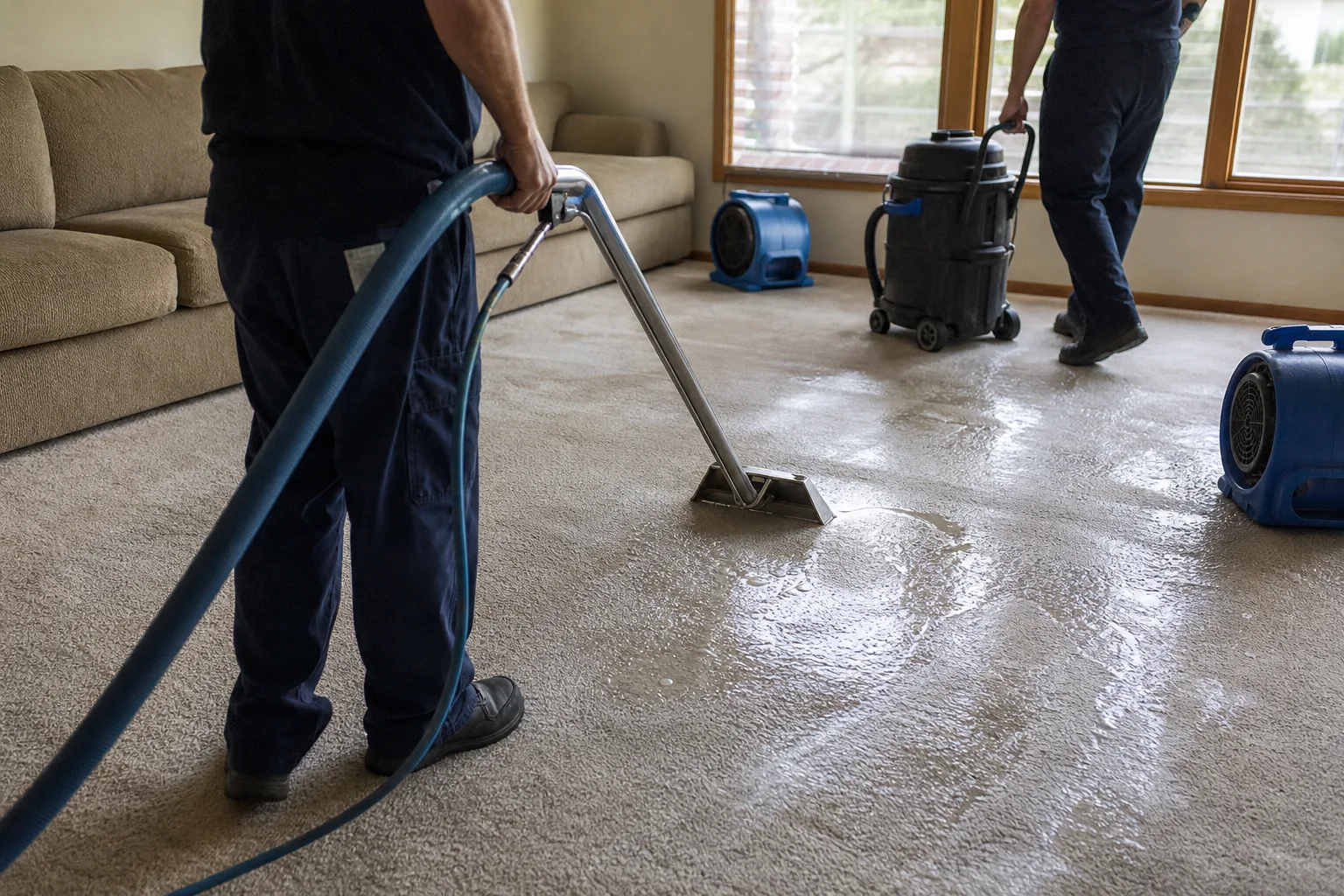
Water is standing on your floor, rising through the carpet, or darkening the base of a wall. Water extraction pulls it out of your Santa Ana home, and structural drying then draws the moisture out of the underlay, wallboard, framing and concrete that took it in. Extraction takes out the liquid, and the first call fixes the share still to dry.
What you are seeing
Three situations that bring people to this call
Calls usually start with water you can see, water you can feel or water you can only smell. Each needs a different first move.
- A sheet across the utility room
Water has run along a hallway runner and is lapping at the edge of a rug.
- A spongy spot underfoot
A cold, damp corner or a door that suddenly sticks means water has moved into the frame around it.
- A sour, earthy odor
A closet, a vent register or a wardrobe wall gives it off with nothing wet to see.
Choose your situation
Choose the situation that matches yours
- Emergency Water RemovalWater pouring in or standing on the floor: call for emergency removal before it reaches wall bases and subfloor.
- Structural Drying and DehumidificationWater gone but walls, framing or floors still damp: structural drying pulls out what the materials soaked up.
- Wet Carpet and Flooring DryingCarpet squelching or flooring lifting at the seams: call for drying before the pad soaks the slab.
- Ceiling and Wall Water DamageBrown stain, bubbling paint or a dripping ceiling: call before water pools above the board and sags it.
- Basement Water RemovalWater in a below-grade room: call for removal before it soaks lower walls and slab.
- Crawl Space Water RemovalWater under a raised floor: call for crawl space removal before joists and subfloor soak.
- Hardwood Floor Water DamageHardwood cupping, gapping or lifting: call before water in the boards and subfloor swells them past recovery.
- Drywall and Insulation Water DamageSoft drywall, bubbling paper or wet insulation: call before the wall board crumbles.
- Concrete Slab and Subfloor DryingCool damp slab or soft subfloor under the flooring: call for slab and subfloor drying before moisture lifts your floors.
- Air Movers and DehumidifiersDamp walls, cool carpet and heavy air after the water stops: call for the airflow and dehumidification that finish the drying.
- Cabinet and Vanity Water DamageWet cabinet floor, swollen toe-kick or sagging vanity door: call before particleboard splits and the wall behind it soaks.
Loss risk
What hidden water does while you decide
Wood takes water in slowly and gives it back more slowly still. Within days the lowest wall boards turn spongy, casings pull away at its joints and the slab keeps pushing moisture up into your flooring.
Liquid water is easy to remove and soaked material is not, so the first call decides what share of your home takes the slow route.
(657) 332-2040Property type
Rooms and buildings that change the first move
A utility closet, a bathroom above a living room and a patio door at ground level each send water somewhere different. Your first call sorts out which floor, which wall and which room hold the most of it.
Stacked floors and shared walls carry water to the neighbors of the source, and a single-story Orange County home on a slab sends it sideways under your flooring before any mark appears.
Restoration scope
The two jobs inside every call
Extraction removes the liquid from hard floors, carpet and underlay, which keeps the water from reaching new material.
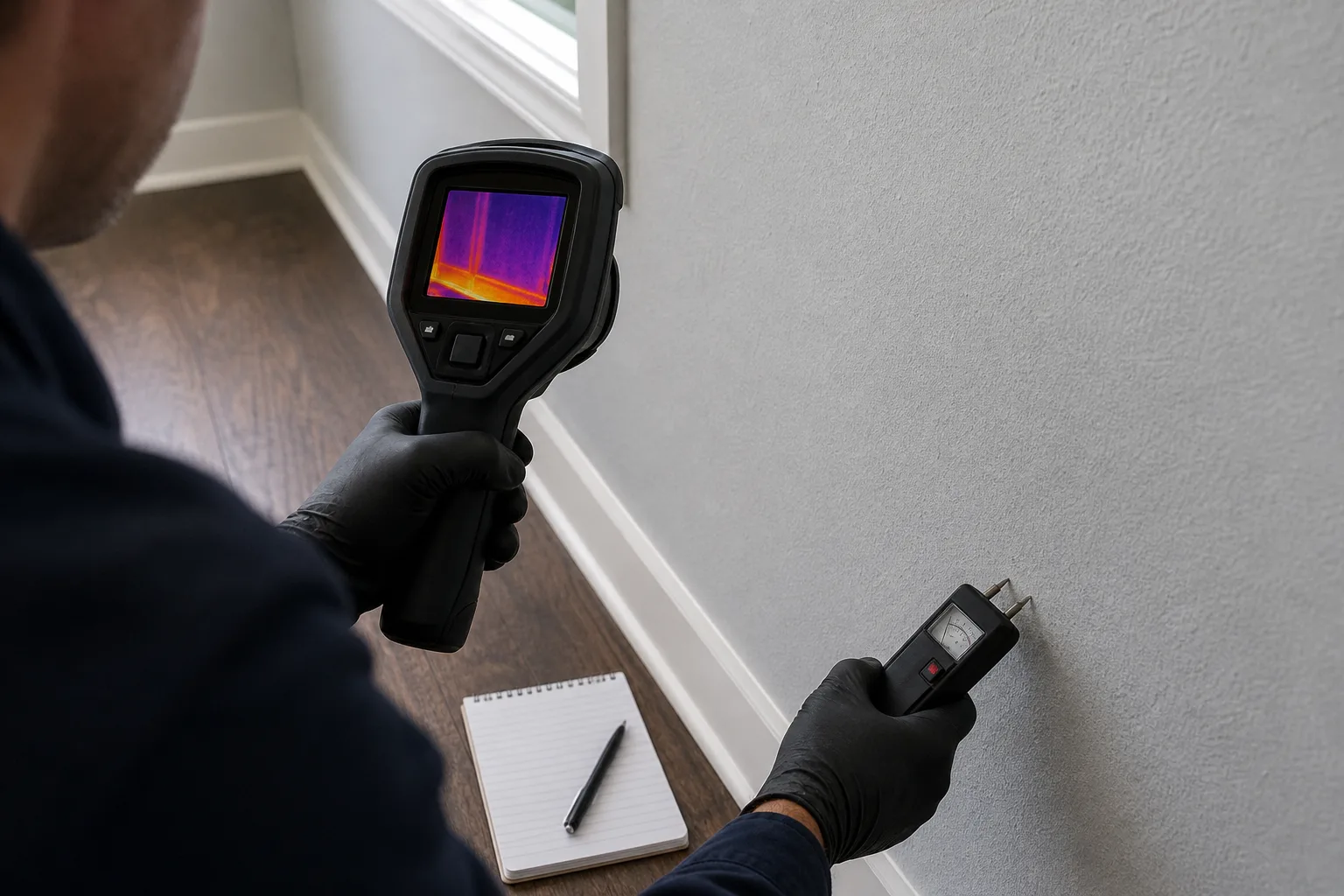
Drying removes what already soaked in. Moisture mapping traces the wet area through floors, walls and cabinets, and structural drying then brings each material down to a dry reference reading.
Material that cannot dry, such as a soaked underlay, swollen casings or the foot of a wet wall, comes out so the structure behind it can.
Property type
Match the source to the work
A cracked fitting, a clogged trap and a roof edge that sheds onto a wall each leave different water behind, and a source inside a wall stays hidden longer than one on a floor. Water still lying on the floor calls for emergency water removal in Santa Ana first.
Moisture that outlasts the surface water, in cavities and framing, is structural drying and dehumidification in Santa Ana work. Water that has gone under a raised floor belongs with crawl space water removal in Santa Ana, because the subfloor soaks from beneath.
Local detail
Ground floors and upper floors hide water differently
Water on a ground floor travels sideways beneath the flooring before it shows, and water from an upper story comes down through the ceiling into the walls below. Either way the wet zone is wider than the mark on the surface, so call about every material the water reached and not only the pool.
Triage order
Why the call you make now decides what stays
Liquid water leaves a room far more easily than moisture that has moved into wood, wallboard and concrete. Every day it sits shifts more of your flooring and walls from drying in place to cutting out.
Calling at the first standing water in Santa Ana keeps the water on the surface where extraction takes it out, and the most of your home stays.
Scope: Emergency extraction and structural drying clearance only. Structural rebuild and finishing carpentry are contracted separately.
Service area
Santa Ana ZIP codes
- 92701
- 92703
- 92704
- 92705
- 92706
- 92707
Every responding technician is independent. Before work begins, confirm the technician's license, insurance and pricing with them directly.
Common questions
What Santa Ana owners ask about extraction and drying
How do you know a wet room is dry?
Readings decide, not touch. Every wet wall, floor and cabinet has to match a reading taken in an unaffected room of your home before the work ends.
Does the carpet have to come out?
The carpet itself can often stay after extraction and drying, while soaked underlay usually cannot because it holds water against the slab. The water source and the readings decide.
Should you wait until the floor looks dry?
No. A surface that looks dry can sit over wet underlay, damp wall bases and a wet slab, and that hidden moisture keeps swelling casings and lifting flooring.
Can water that started out harmless become a hazard?
Yes. Water from a failed line carries in grime from the floor as it spreads, which is one more reason the liquid should leave early.
Water damage keeps spreading until it is dried.
Call from Santa Ana before the water reaches the next room, the subfloor or the framing behind your walls.