
A slab holds water in its pores and passes it upward into any material resting on it, long after the surface water is gone. Moisture breaks the adhesive bond under flooring, so it begins to lift.
Service · Santa Ana, CA
Concrete Slab and Subfloor Drying in Santa Ana, CA
Your flooring is lifting over a slab that feels cool and damp, or the plywood under it has gone soft. Concrete slab and subfloor drying draws the moisture out of the concrete and the sheathing beneath your Santa Ana floors. The flooring shows the damage before the concrete does, which is why a lifting seam is worth a call.
What you are seeing
A cool damp slab and flooring that will not lie flat
Concrete and plywood take in water slowly and keep it longer than any surface finish does. You usually notice the effect on the floor above before you notice the slab.
- Flooring that lifts
Moisture from the slab pushes up beneath stone, boards or sheet flooring.
- A cool, clammy floor
Wet concrete stays cool and feels damp under your hand.
- Soft sheathing
Plywood subfloor takes water from above or from a damp slab and loses stiffness.
- A sour smell from a closed room
Moisture in the slab and the layers above it is releasing slowly.
Loss risk
Everything above a wet slab takes its moisture
Plywood sheathing swells, delaminates and loses its hold on fasteners. Sill plates in contact with wet concrete stay wet and begin to rot, and water at the slab edge climbs into the board along the wall.
A damp slab keeps feeding your flooring from below until the concrete has given its water up.
(657) 332-2040Restoration scope
How concrete and sheathing are dried together
Slab drying is slow and gradual, since forcing concrete cracks the surface and rushing leaves moisture behind in the core.
- Slab moisture readings
Depth readings show how much water the concrete holds.
- Surface extraction
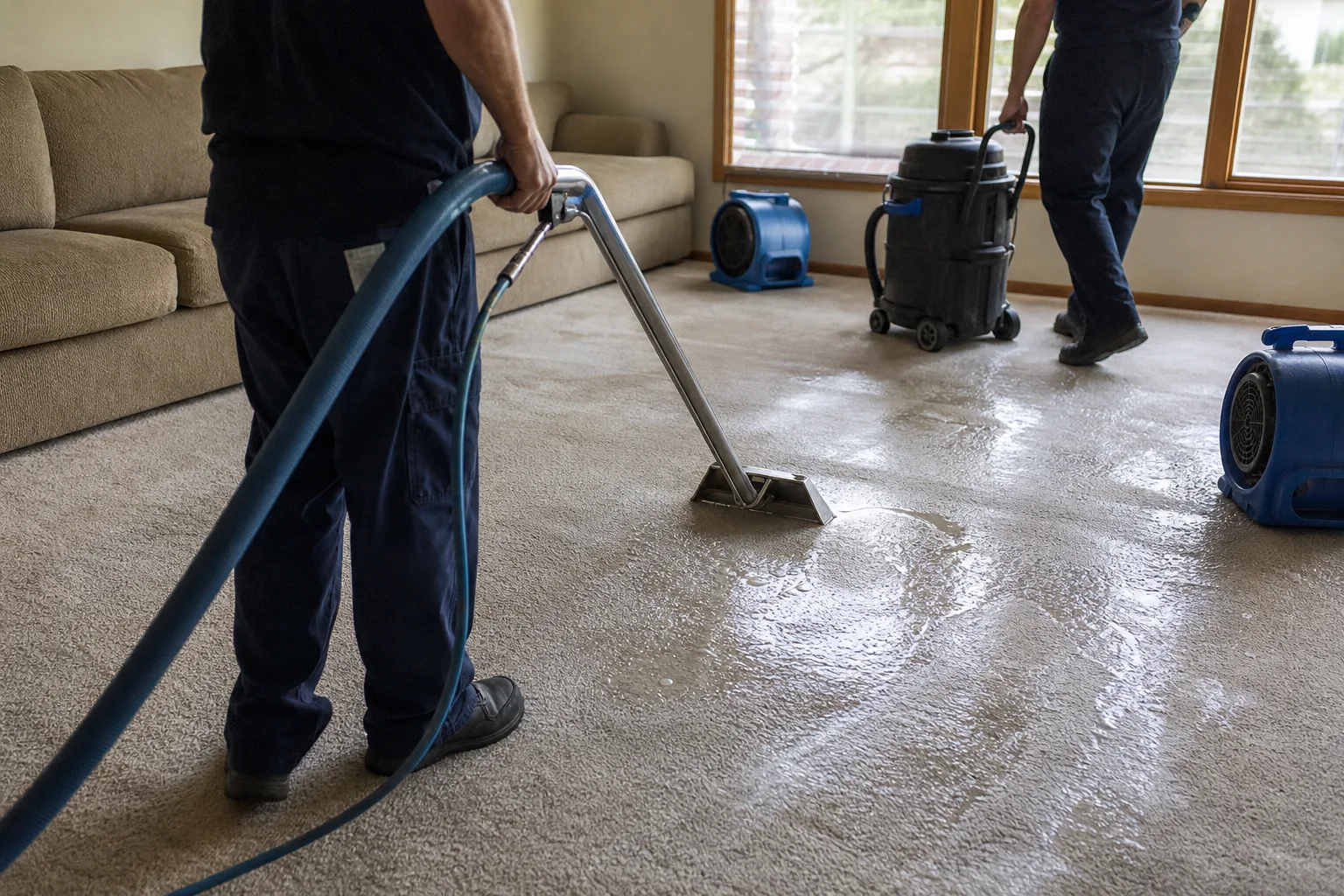
Strong extraction clears the water on the slab before it soaks further in.
- Sheathing drying
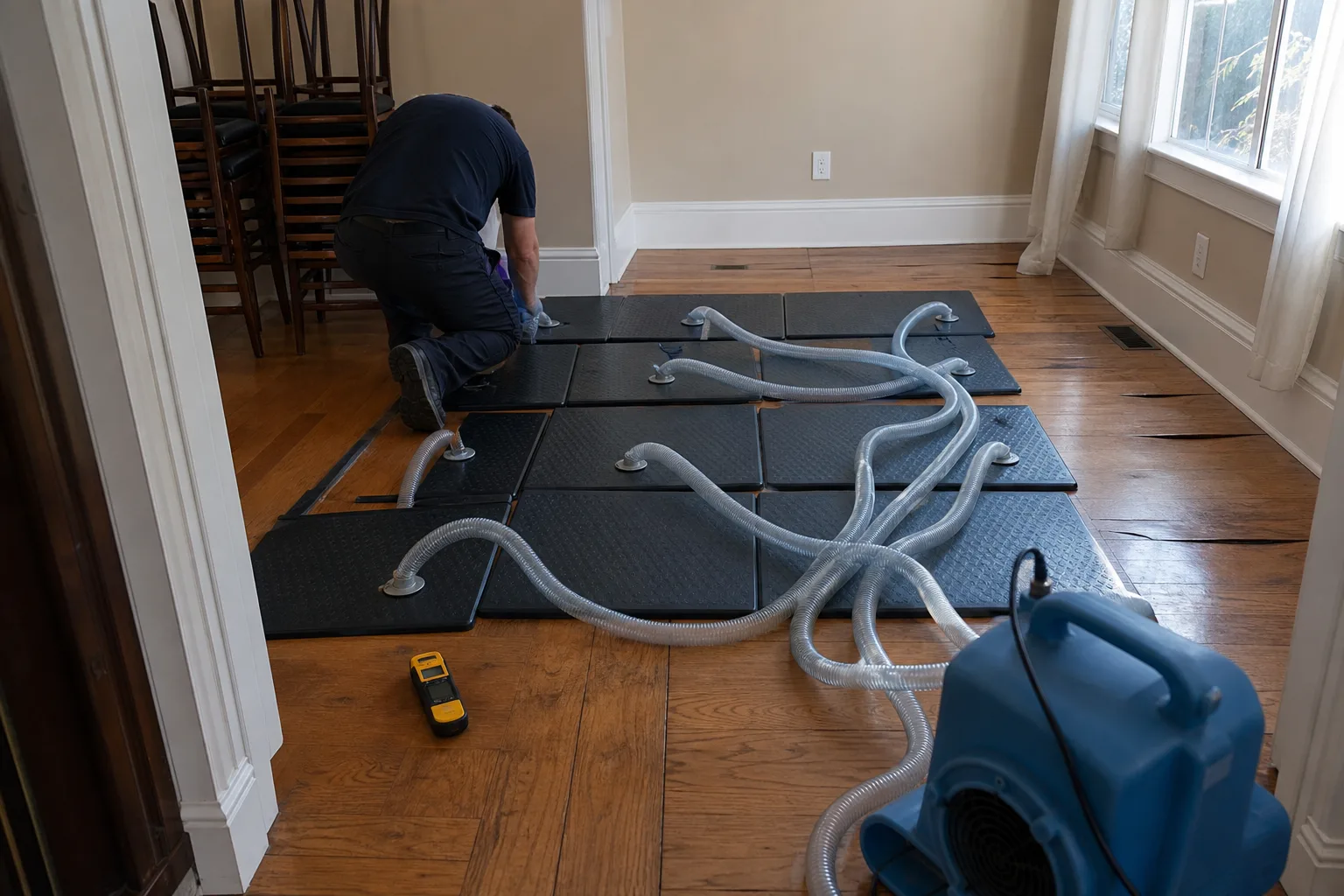
Moving air dries plywood and the layers over the slab.
- Sustained dehumidification
High-capacity dehumidification keeps drawing water out of the concrete until it reaches its target.
Property type
What sits over your slab changes the plan
Ceramic and stone coverings, glue-down sheet goods and floating boards each hold or pass moisture differently. Anything that seals the slab holds water beneath it, and anything that floats swells at its edges.
Each covering sends moisture a different way, so the drying plan follows what your floor is made of and not only what the slab reads.
Service sequence
Drying moves from the slab surface down to its core
Concrete scanned
Depth readings map the slab and the layers above it.
Surface water lifted
Extraction clears the slab and the flooring layers of standing water.
Moisture drawn from the core
Sustained dehumidification and moving air work through the sheathing and the slab.
Slab cleared for flooring
The concrete matches a dry reference before any flooring returns.
Carpet that sat on the slab are covered in wet carpet and flooring drying in Santa Ana.
Local detail
Water at a garage door or a ground-floor threshold
The slab is the first thing storm-drain overflow reaches in a ground-floor room. OC Public Works states that parts of Orange County can still flood this way, so call once water has crossed your threshold, so the wet flooring, wall bases and subfloor are located and dried before the next storm.
Triage order
Why a damp slab does not fix itself
Concrete releases water far more slowly than the surface suggests. Each week the slab stays wet, more of the flooring and the sheathing above it gives way.
Call when the first seam lifts, so the slab dries out under flooring that is still sound.
Scope: Emergency extraction and structural drying clearance only. Structural rebuild and finishing carpentry are contracted separately.
Service area
Santa Ana ZIP codes
- 92701
- 92703
- 92704
- 92705
- 92706
- 92707
Every responding technician is independent. Before work begins, confirm the technician's license, insurance and pricing with them directly.
Common questions
Slabs, adhesive and drying time
Does concrete really hold water?
It does. Concrete is porous and holds moisture in its pores, which keeps rising into whatever rests on it until drying removes it.
Why does flooring lift over a wet slab?
Moisture from the slab breaks the adhesive bond and swells the layers above it, so the flooring pushes up at the seams.
How do you know the slab is dry?
Readings decide, not surface feel. The slab has to match a dry reference before anything goes back on it.
Can flooring stay over a wet slab?
At times, if the covering lets moisture out. Coverings that seal the slab usually have to open so the concrete can release its water.
Why does a slab take so long to dry?
Concrete is dense and thick, and its water has a long way to travel to reach the surface, so the drying runs on a gradual schedule that readings track.
Water damage keeps spreading until it is dried.
Call from Santa Ana before the water reaches the next room, the subfloor or the framing behind your walls.