
Gypsum acts like a wick, and insulation acts like a reservoir. Together they keep your wall wet long after its source stops. Water travels up through the core far above the line you can see, and wet paper loses its bond and lifts away.
Service · Santa Ana, CA
Drywall and Insulation Water Damage in Santa Ana, CA
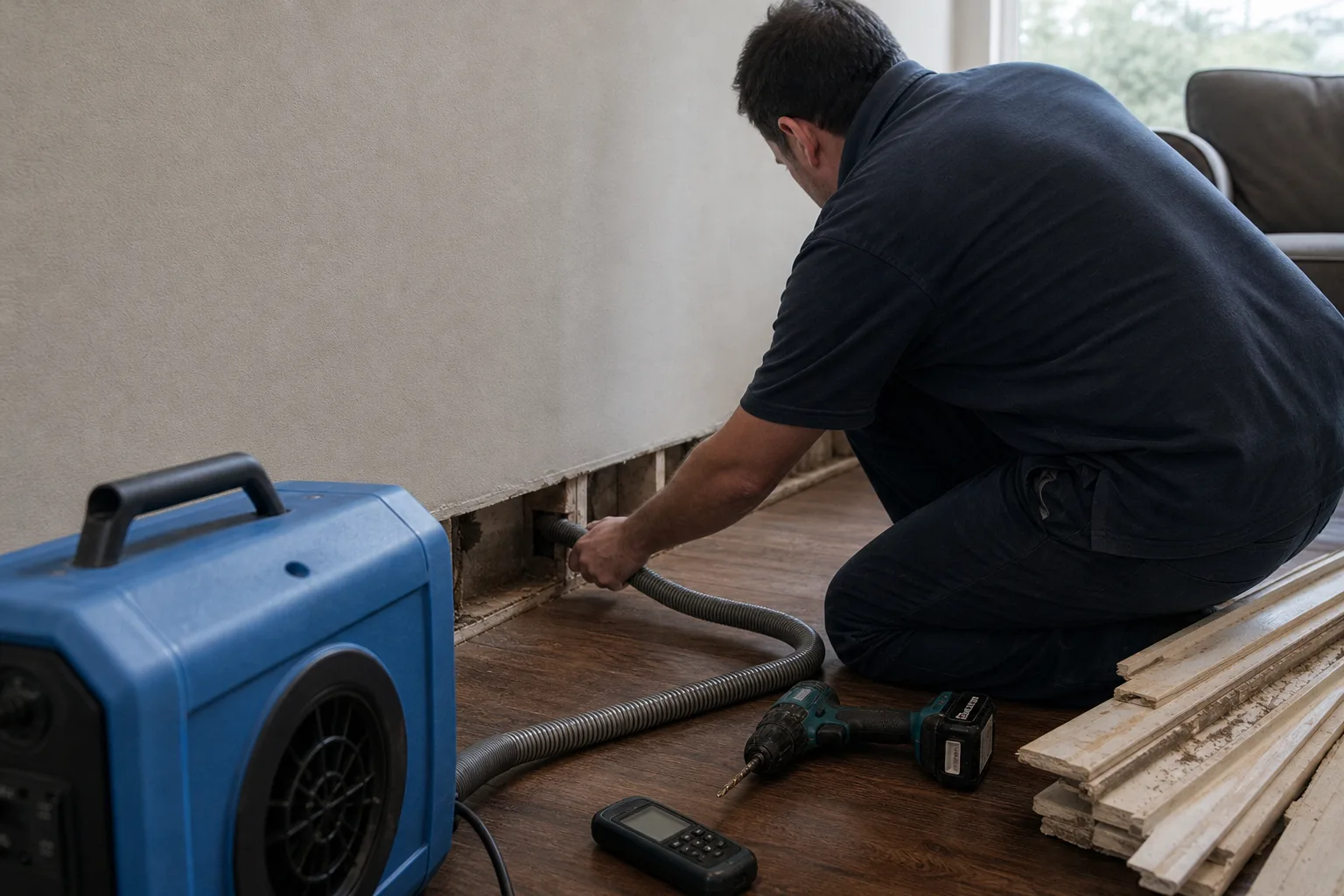
Your drywall has gone soft at the base, the paper face is bubbling, or the insulation behind it is holding water. That drywall and insulation water damage in your Santa Ana walls does not dry the way a floor does, because the board and the batts stay wet inside the cavity. A cut that follows the wet line inside the wall lets the rest of the board dry or leave cleanly.
What you are seeing
Soft board, bubbling paper, a batt that sags
Water enters your wall from the floor, from above or from a line in the cavity. What you see is the board; what holds the water is the gypsum core and the batts.
- Soft board at the base
The core has absorbed water from the floor and no longer holds a screw.
- Bubbling paper face
Water is pushing the paper away from the core.
- Slumped insulation
Batts have taken on water and pulled away from the studs.
- A water line on the wall
The board has pulled water upward to a clear edge.
Loss risk
How wet board and wet batts keep each other wet
Batts hold water against the studs and the back of the board, so wood in contact with them stays wet and begins to rot.
Board and insulation hold water longer than a floor does, and each keeps the other wet.
(657) 332-2040Property type
Fiberglass, cellulose and foam react differently
Fiberglass batts hold water between their fibers and can dry once the wall is open. Cellulose and blown-in fill clump, sag and hold water against the framing, so they come out.
Spray foam sheds water at its surface and usually stays unless it has pulled away from the studs. Knowing which one fills your wall tells you how much of it has to leave.
Restoration scope
Where the cut line is drawn and why
The cut line follows the wet edge inside the wall and not the stain, so only the board and fill that cannot dry leave.
- Wet-edge scan
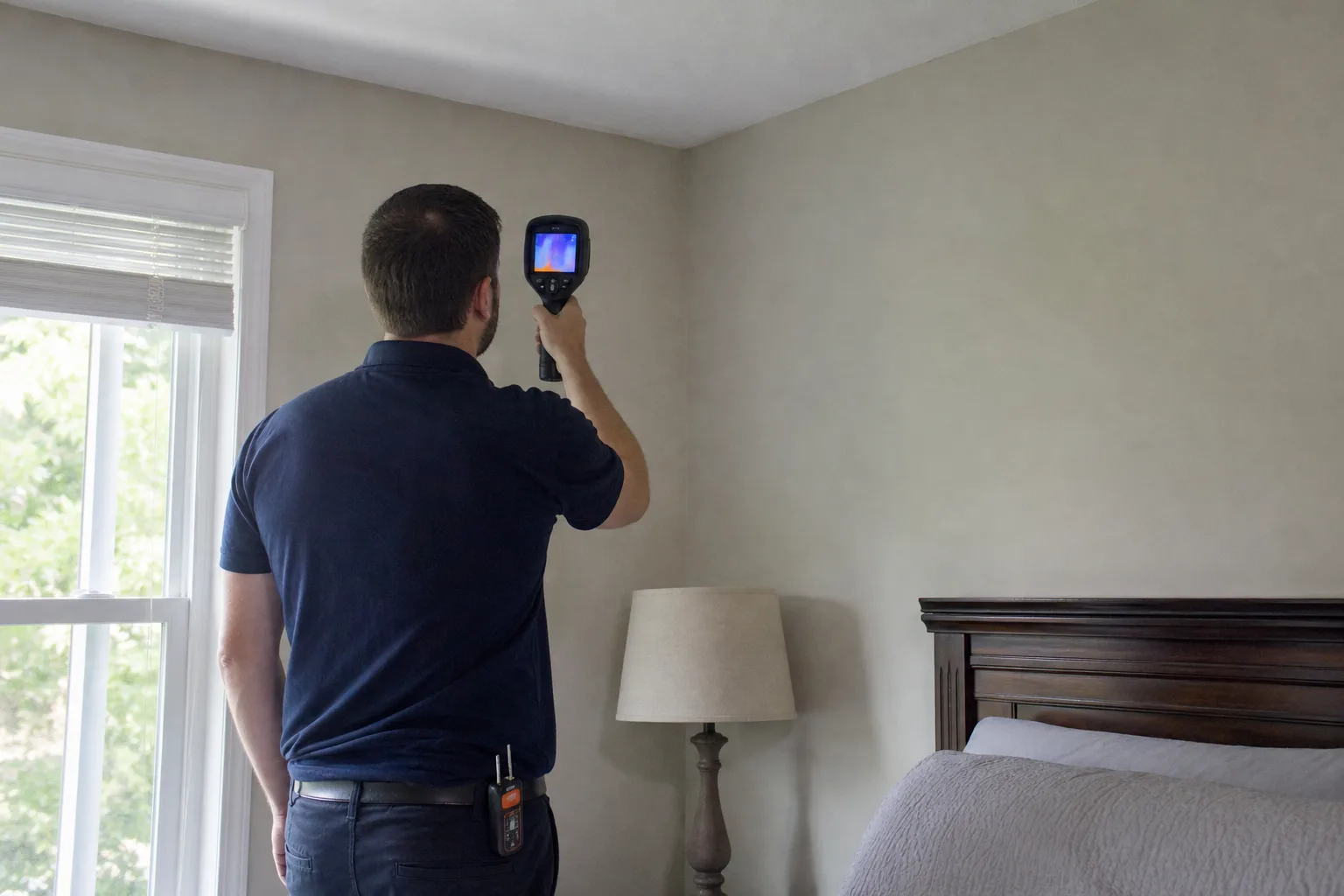
A moisture reading finds the highest point the water reached inside your wall.
- Fill removal
Wet fill comes out of your wall and stays out.
- Board removal
Gypsum that has lost strength comes out along a straight line above the wet edge, along with the screws that no longer grip it.
- Stud-bay drying
Moving air and dehumidification dry the studs and plates once the wall is open.
Service sequence
How the wall goes from wet to dry
Wet line found
The survey shows the top of the wet zone inside each wall.
Cut made
Board and batts come out above the line in controlled cuts.
Framing dried
The setup continues until studs and plates read dry.
Cut edges cleared
Last values on the framing and the edges of the cut match a dry reference.
Water that came from a ceiling above is a ceiling and wall water damage in Santa Ana case.
Local detail
Older walls in older homes
Roughly 80 percent of the housing units in Santa Ana predate 1980, which means many walls here carry older insulation and older board that have taken water before. Call when you see a stain or a soft spot on an Orange County wall, so the wet area is traced through the wall and not only along the visible mark.
Triage order
Board that stays wet loses strength from the bottom up
Board that stays wet loses its strength from the bottom upward, and a larger share of your wall comes out each day. Early work keeps the cut line low, because the board keeps wicking while you wait.
The first bubbled paper face is the moment to call, before the board has wicked water up the wall and the cut line climbs with it.
Scope: Emergency extraction and structural drying clearance only. Structural rebuild and finishing carpentry are contracted separately.
Service area
Santa Ana ZIP codes
- 92701
- 92703
- 92704
- 92705
- 92706
- 92707
Every responding technician is independent. Before work begins, confirm the technician's license, insurance and pricing with them directly.
Common questions
Wet board, wet batts and the cut line
Does wet drywall always come out?
No. Board that is clean, unbroken and only damp can dry in place, while board that has gone soft or crumbled does not.
Why does insulation matter?
Wet batts hold water against the studs and the back of the board, so the wall stays wet even when the surface feels dry.
How high does the cut go?
The readings decide. The cut follows the highest point of the wet line inside the wall, not the stain on the surface.
Why does the paper face bubble first?
Water reaches the paper before it reaches the core, so the paper lifts away from the gypsum while the board below it is still soaking.
Water damage keeps spreading until it is dried.
Call from Santa Ana before the water reaches the next room, the subfloor or the framing behind your walls.