
Wood absorbs water through its grain and releases it more slowly than it took it in, so a floor stays wet beneath a finish that looks sound. The finish traps water against the boards and slows its release.
Service · Santa Ana, CA
Hardwood Floor Water Damage in Santa Ana, CA
Your hardwood boards are cupping at the edges, gaps are opening between them, or the floor is lifting off the subfloor. Hardwood floor water damage comes from water soaking the boards and the wood beneath, and it keeps moving through your Santa Ana floor after the surface looks dry. Boards give water back more slowly than they took it in, so the first cupped edge is already late in the process.
What you are seeing
Boards that cup, gap and lift
Solid and engineered hardwood in an Orange County home take in water through every gap, nail point and unfinished edge. The change shows up later as shape, not as a puddle.
- Cupped boards
The edges of your boards rise above the center because the underside holds more water than the top.
- Crowned boards
The center rises after the boards dry unevenly from the top down.
- Gaps between boards
Boards shrink back from each other as water leaves them unevenly.
- A lifting floor
Your boards press against each other and rise off the subfloor.
Loss risk
Wood releases water more slowly than it took it in
Water enters at every fastener and joint and stains the grain, and the panels or boards under them soak and keep them wet from beneath. Engineered boards have glued layers that separate once they stay wet.
A polyurethane finish seals the face of a board but not its edges, so water that enters at a seam stays trapped under the coating. A worn finish admits it everywhere, which is why a hallway floor you walk daily can cup sooner than one under a bed.
Wood keeps swelling for as long as it holds water, and boards give it back slowly.
(657) 332-2040Restoration scope
How wood floors are brought back to a dry standard
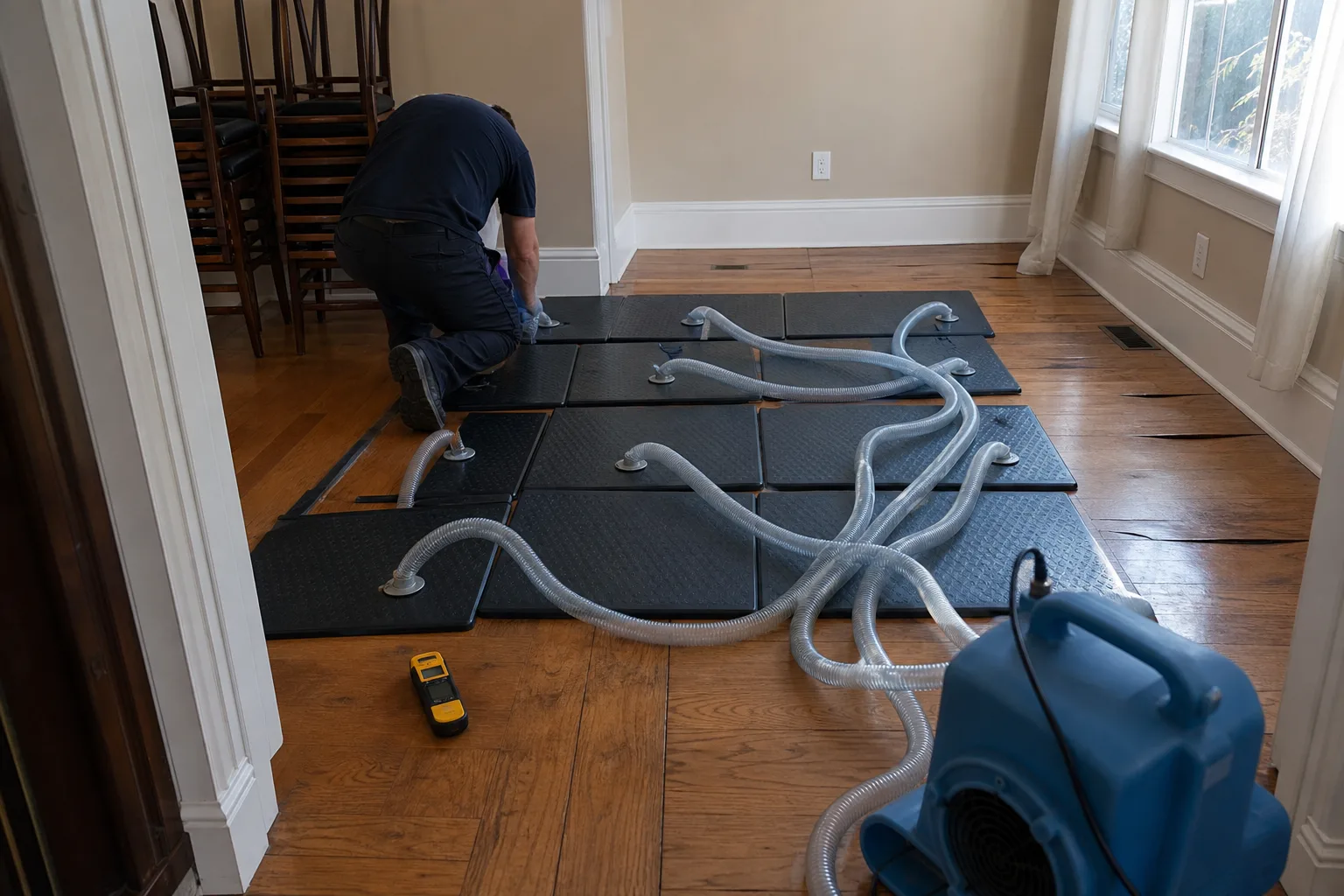
Hardwood dries by controlled release: pushing it too hard cracks the boards, and holding back lets the cupping set.
- Board-by-board readings
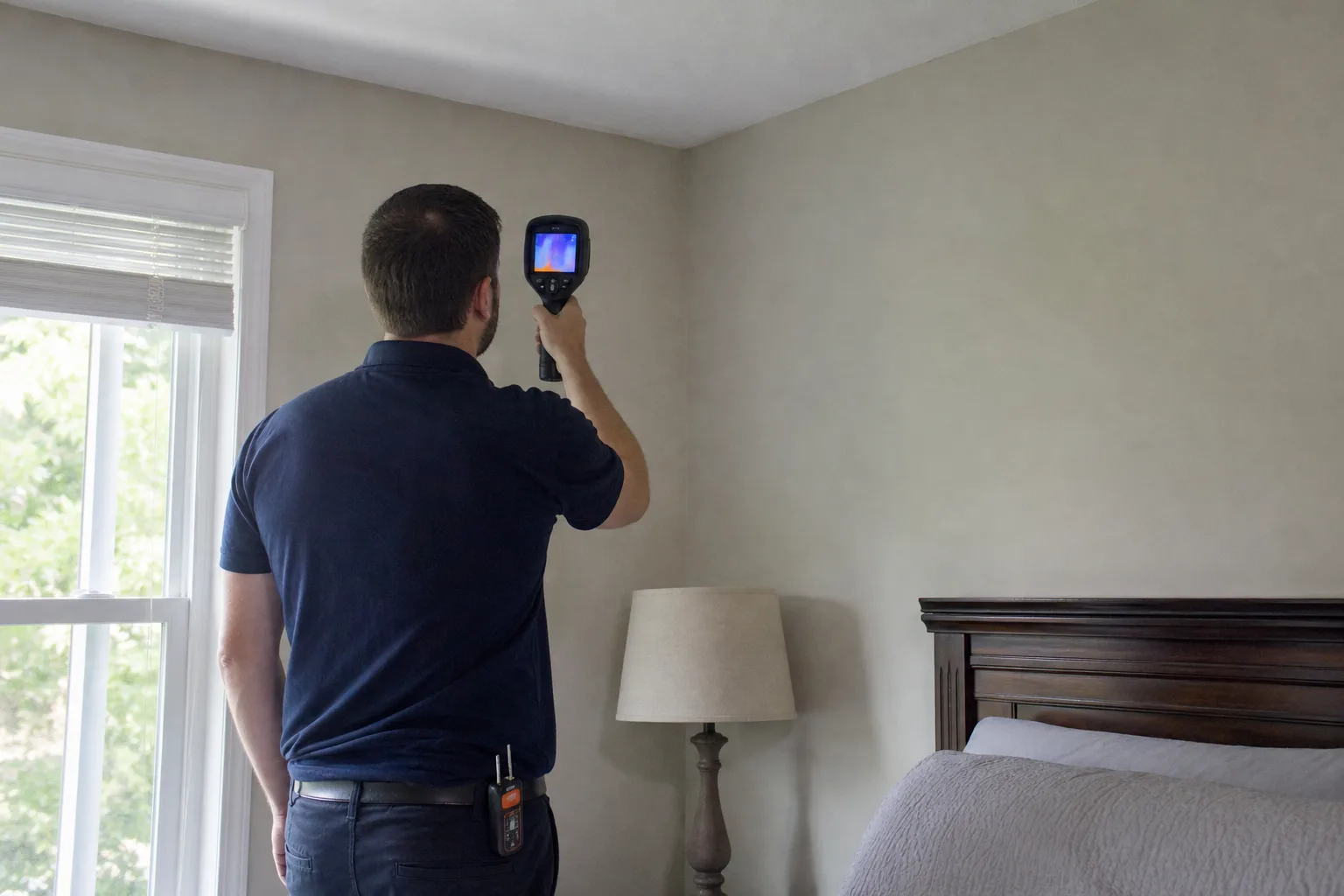
Thermal moisture mapping tracks moisture in each board and the subfloor under it.
- Surface extraction
Strong extraction pulls water off the boards before it soaks in.
- Controlled floor drying
Moving air and dehumidification draw water out of the boards and the layer beneath them.
- Selective removal
Boards bent beyond saving come out so the sound floor stays.
Property type
Narrow strips, wide boards and engineered boards
Wide boards move more than narrow strips, and engineered boards behave differently from solid ones. Your floor type decides how it cups and how much of it can return.
A floor glued down moves differently from one nailed to the subfloor, and the readings under each follow a different path. That is why two rooms with the same flood can end up with different outcomes.
Service sequence
A hardwood floor job, board by board
Readings first
The boards and the subfloor get a baseline value against a dry room.
Water pulled
Extraction clears the surface and the seams.
Floor dried
Airflow and dehumidification continue until the boards drop toward their targets.
Boards judged
Readings and the shape of the boards show which stay and which leave.
A slow leak under an older floor goes unseen the longest, and vacant seasonal home water damage in Santa Ana shows how far it can travel.
Local detail
Where hardwood meets water first
Water usually reaches hardwood at an entry door, a bathroom threshold, a patio slider or a laundry closet, and it spreads under the boards from there. Call about the wet area under your boards and not only the damp patch on top.
Triage order
Why the first call decides how much of the floor survives
Cupping that sets cannot be dried out of the boards, and each day of delay moves more of the floor toward replacement. Drying that starts promptly keeps more of the boards and the subfloor.
The first lifted edge is your cue to call, because drying that starts on boards still flat has the most of your floor to work with.
Scope: Emergency extraction and structural drying clearance only. Structural rebuild and finishing carpentry are contracted separately.
Service area
Santa Ana ZIP codes
- 92701
- 92703
- 92704
- 92705
- 92706
- 92707
Every responding technician is independent. Before work begins, confirm the technician's license, insurance and pricing with them directly.
Common questions
Cupping, shape and engineered boards
Can cupped boards come back level?
Often they relax as the wood dries under controlled conditions. Boards that dry too hard or stay wet too long can set in their new shape.
Why does the floor change days after the water?
Wood takes water in and gives it back gradually, so the shape moves as moisture works through the board and the subfloor.
Does engineered flooring recover?
The glued layers react differently from solid wood, and separation under the finish often means the board comes out. Readings decide.
Does the floor have to come up everywhere?
No. Readings often show water confined to one run of boards, and the sound boards around it stay.
Water damage keeps spreading until it is dried.
Call from Santa Ana before the water reaches the next room, the subfloor or the framing behind your walls.