
Sediment works into carpet fibers, grout lines and the gap under your baseboards. As the water around it recedes, it dries into a crust that holds moisture against the floor beneath and cannot be wiped away.
Service · Santa Ana, CA
Flash Flood Cleanup in Santa Ana, CA
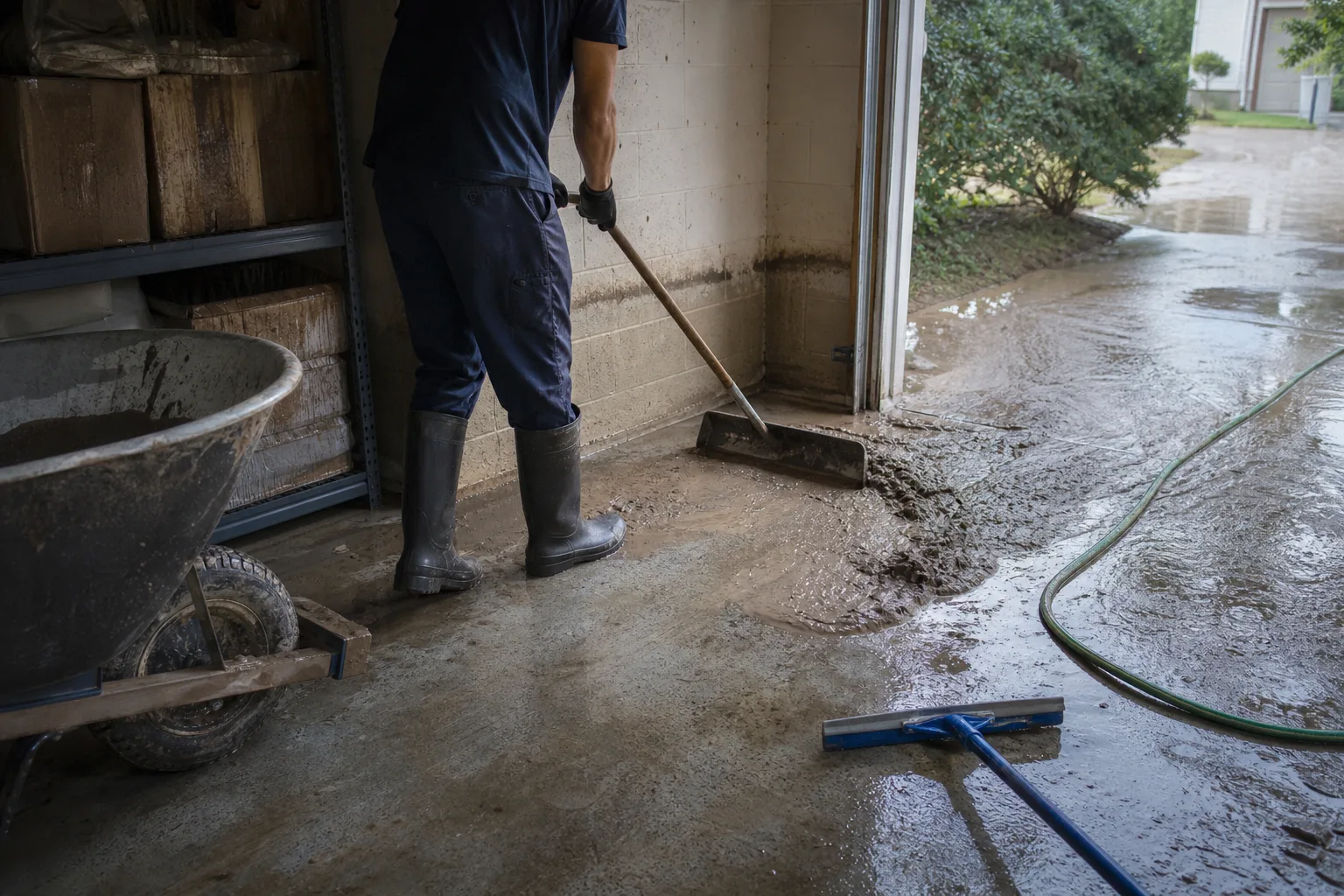
Muddy water has surged across your threshold and left silt, grit and a brown film on every floor it crossed. Flash flood cleanup in your Santa Ana home clears the water and the sediment together, then scrubs and dries the surfaces underneath. Call at the first brown film on your floor: silt lifts while it is wet and turns to crust once it dries.
What you are seeing
Muddy water that hit all at once
A flash flood does not seep. It comes through a door in a rush, spreads across your floor plan and drops whatever it was carrying.
- A brown layer on every floor
Fine silt has coated tile, carpet and hardwood alike.
- Debris against doors and walls
Leaves, gravel and trash lodged where the water slowed.
- A front hall full of brown water
The lowest openings took the heaviest load.
Loss risk
What silt and grit do once the water thins out
Floodwater also carries oil and organic matter, and grit scratches finished floors as people walk across it, which adds a second kind of damage to the first.
Restoration scope
What flash flood cleanup removes, step by step
The work takes the mud out first, then the moisture, so nothing gritty dries into place.
- Slurry removal
Heavy-duty extraction lifts muddy water and the loose sediment it carries.
- Debris clearing
Gravel, leaves and trash come off floors and door tracks.
- Detailed scrubbing
Tile, sealed concrete and grout lines get a hand scrub and a rinse.
- Carpet judgment
Carpet packed with sediment is weighed against removal.
Hand work matters because extraction leaves a thin film that only scrubbing lifts, and a floor that looks clean can still hold fine sediment in its grooves.
Silt that dries on your floor traps moisture beneath it: call before it hardens and bonds to the floor.
(657) 332-2040Property type
Which rooms collect the silt
Entries, garages and ground-floor hallways collect the most, because water slows there and drops its load. Rooms farther in carry a thinner film. A threshold that opens straight onto a driveway or a yard takes the heaviest load.
Water that soaked in more than it flooded across belongs with flood damage restoration in Santa Ana, where the drying sequence runs through the whole building.
Service sequence
Mud to dry structure, in sequence
Slurry out
Extraction and loading remove standing water and the heaviest sediment.
Debris cleared
Gravel and trash leave every threshold and door track.
Surfaces scrubbed
Hand work clears the fine film that extraction leaves.
Moisture driven out
Drying continues until the slab, the lower walls and the flooring read dry.
Property type
Hard floors, carpet and grout lines each hold silt differently
Tile and sealed concrete release most of the film to scrubbing, but grout lines hold fine sediment that needs its own pass.
Carpet packs with silt, and the layer beneath it soaks up the water it carried. A call about your floors sorts out which scrub clean and which come up.
Local detail
Flooding here can come from more than one source
OC Public Works notes that parts of Orange County can still flood from deficient regional facilities as well as from local drains. Whatever source put water in your Santa Ana property, call once it has entered, so the work reaches the floors, the lower walls and the subfloor before another storm hits.
Triage order
Mud that dries is harder to lift
Mud that dries is harder to lift, and moisture sealed under it keeps soaking your floor. Every added day moves another layer of flooring from cleaning to removal.
Calling about flash flood cleanup with the silt still wet puts mud removal ahead of the crust on your floors.
Scope: Emergency extraction and structural drying clearance only. Structural rebuild and finishing carpentry are contracted separately.
Service area
Santa Ana ZIP codes
- 92701
- 92703
- 92704
- 92705
- 92706
- 92707
Every responding technician is independent. Before work begins, confirm the technician's license, insurance and pricing with them directly.
Common questions
After a sudden flood, what remains
Why does silt matter so much?
It carries dirt into porous material and dries into a crust that holds water against the floor. Lifting it while it is wet keeps the surface underneath open to drying.
Does everything the flood touched have to go?
No. Hard surfaces and framing that can be scrubbed and dried stay. Porous material that took in muddy water usually leaves.
Is the water still a concern once it is gone?
Not until the surfaces it covered are cleaned and dried. Film left on flooring and framing keeps contaminating whatever touches it.
Can the mud wait until the water recedes?
No. Sediment that dries bonds to flooring and becomes far harder to lift, so the call comes while it is still wet.
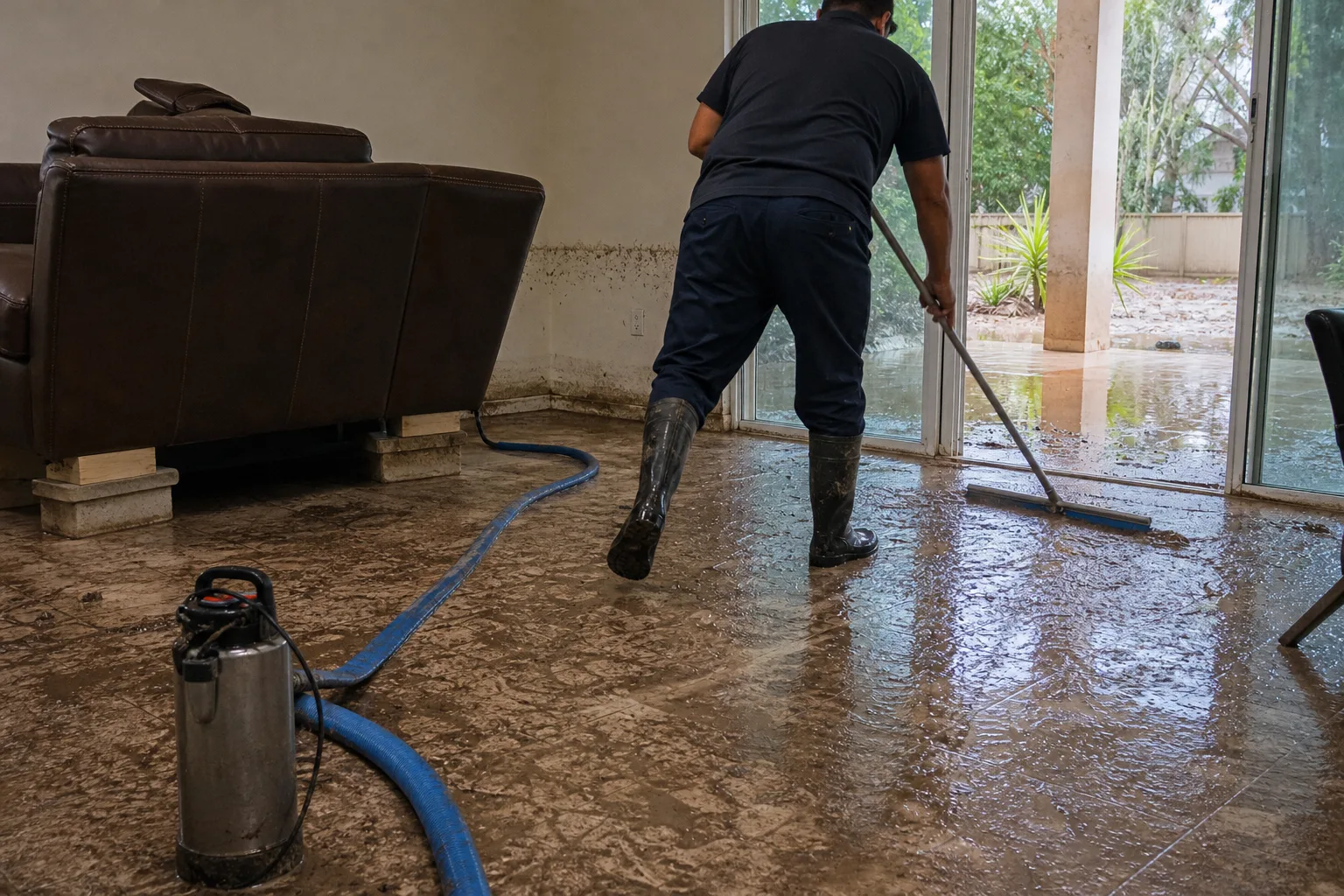
Water damage keeps spreading until it is dried.
Call from Santa Ana before the water reaches the next room, the subfloor or the framing behind your walls.