
The bay between two studs is a closed box. Water that runs down inside it collects on the lowest framing member, soaks the sheathing and the wall batting, and wets the back of the board.
Service · Santa Ana, CA
Water in the Walls After a Storm in Santa Ana, CA
Your exterior wall feels cold and damp, the paint is bubbling and a damp band is creeping up from the floor, long after the rain stopped. Water in your walls after a storm sits in the cavity between the siding and the board, where it keeps soaking the studs. At the first cold patch on the wall, call: the water is still in the cavity and has not yet worked into the studs.
What you are seeing
A wall that stays wet long after the rain stopped
The storm is gone, but your wall still shows it. A closed wall has no airflow to carry moisture out, so what got in during the storm stays put.
- Bubbling or peeling paint
Water behind the board is pushing the finish off the surface.
- A cold, clammy wall
Wet material in the cavity pulls heat from the room.
- A damp band at the bottom
Water collected at the base of the bay is wicking upward.
- A hollow or spongy sound when you press
The board has lost its strength.
Loss risk
What water caught in a stud bay does to a wall
Every material in that box passes water along to its neighbor. Studs swell, fasteners corrode and your wall stays wet for a long period.
Restoration scope
Getting water out of a closed wall
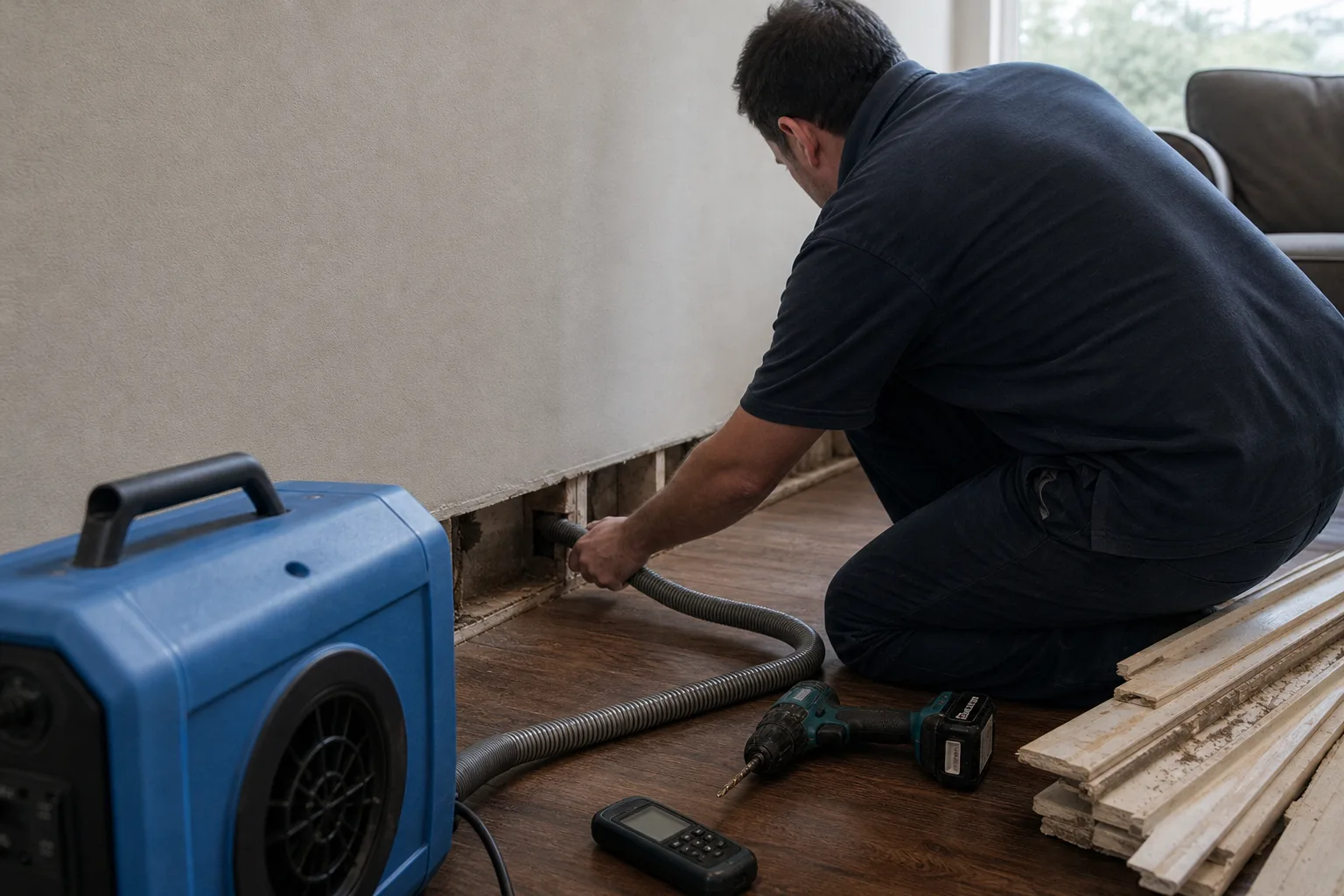
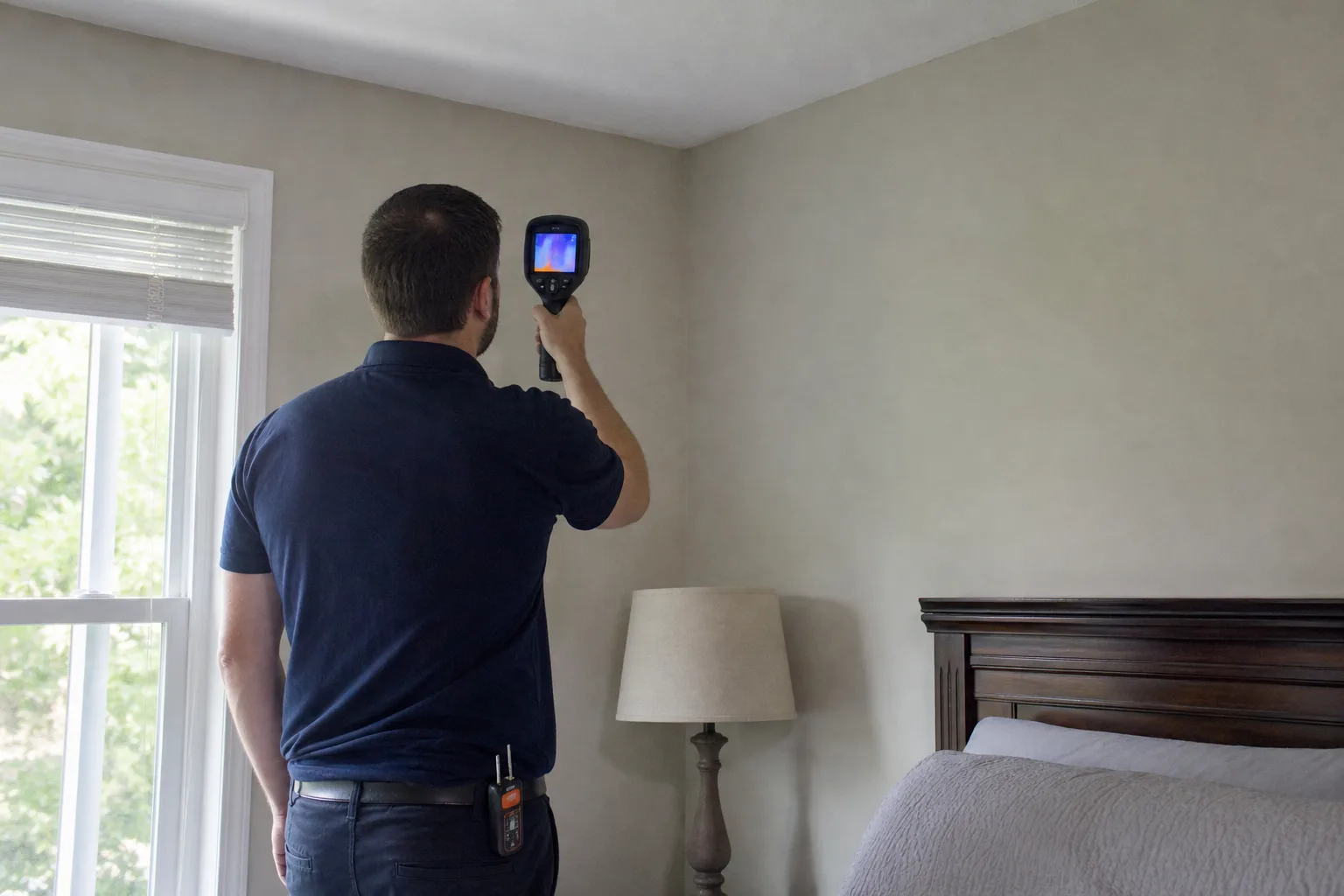
Mapping finds which bays hold water and which are dry. Narrow access holes at the base reach each wet bay, wet wall batting comes out, and drying air runs through the opened bays until the studs and sheathing read dry.
The work opens only the bays that need it, so the remainder of your wall stays in place.
A closed wall dries slowly on its own: call before the water moves from the cavity into the studs.
(657) 332-2040Property type
How water gets inside a wall, and why fixing that belongs elsewhere
Water can enter a wall from the roof edge above, through a siding seam or around a pipe that passes through it. Restoration dries the cavity; closing the way in is another trade's work.
A ring on a ceiling points to roof leak water damage in Santa Ana, while a wall that stays wet points to the water inside it.
Service sequence
The work, bay by bay
Wet bays located
Checks run along the wall and mark every bay that holds water.
Holes made
Small holes at the base reach each wet bay while leaving the remainder untouched.
Bays cleared
Wet wall batting leaves, and standing water at the base is extracted.
Studs dried
Drying air runs until the studs, base framing and sheathing match a dry reference.
Property type
Outside walls, inside walls and shared walls hold water differently
An outside wall carries siding, sheathing and a weather barrier among the layers that can trap water. An inside wall that shares a bay with it takes on water through the framing it sits on.
In an Orange County duplex or townhome, the wall between the two homes carries your moisture next door, so a call about the wall sorts out how far the water traveled along it.
Local detail
A bubble on the wall comes after the water, not before
By the time the finish bubbles on an exterior wall in Santa Ana, the cavity behind it has usually held water for a while. Call when you see the first mark, so the work finds the water in the bay and not only the blister on the surface. Waiting for the finish to peel means the studs have been wet longer.
Triage order
A damp wall keeps wetting the studs inside it
Wet studs and sheathing take long to dry, and a wall that stays damp keeps soaking the room beside it. The longer the cavity stays wet, the more of your wall has to open.
Water in your walls after a storm soaks the least framing when the call comes before the studs have taken it up.
Scope: Emergency extraction and structural drying clearance only. Structural rebuild and finishing carpentry are contracted separately.
Service area
Santa Ana ZIP codes
- 92701
- 92703
- 92704
- 92705
- 92706
- 92707
Every responding technician is independent. Before work begins, confirm the technician's license, insurance and pricing with them directly.
Common questions
Inside a wall that will not dry
Can a wall dry out by itself?
Slowly, if at all. A closed bay has no airflow, so moisture stays in the studs and sheathing.
Does the whole wall have to open?
No. Checks show which bays are wet, and only those open. Dry bays stay closed.
How do you know the studs are dry?
A reading from the studs and the base framing is compared with a dry reading taken in a part of your house the storm never reached.
Water damage keeps spreading until it is dried.
Call from Santa Ana before the water reaches the next room, the subfloor or the framing behind your walls.